
About
About Henan University
Henan University (河南大学, HENU) traces its origins to 1912, when it was founded in Kaifeng as the Henan Preparatory School for Studying in Europe and America. It became National Henan University in 1942, was reorganised as a normal (teacher-training) institution after 1952 and took back the name Henan University in 1984. In June 2000 the original Henan University merged with Kaifeng Medical College and Kaifeng Normal College to form today’s university. The university’s English-language pages add later milestones: Ministry of Education co-construction in 2008, selection as a Plan 111 university in 2016 and entry into the national Double First-Class initiative in 2017, with biology as its Double First-Class discipline.
Where you will be matters, because HENU is no longer a single-city university. Its 2026 undergraduate admissions charter lists three campuses: the Zhengzhou Longzihu Campus (No. 379 North Mingli Road, Zhengdong New District, Zhengzhou), the Kaifeng Minglun Campus (No. 85 Minglun Street, Kaifeng) and the Kaifeng Jinming Campus (North Jinming Avenue, Kaifeng). Kaifeng and Zhengzhou are separate cities. The School of International Education (SIE), which handles international admissions and Chinese-language teaching, is on the historic Minglun Campus in Kaifeng, and every admissions document we could read gives that address. None of those documents says which campus degree students are placed on, and the charter does not link majors to campuses either. Ask the SIE which campus your school is on before you look for housing.
The 2025–2026 Undergraduate Admissions Guide for international students gives the latest institutional profile: three campuses covering 367 hectares, 13 disciplinary categories, 40 colleges, 93 undergraduate programs, 47 master’s and 24 doctoral degree programs, more than 50,000 students and more than 4,700 faculty and staff, including 6 academicians and 41 national-level talents, 5 national key laboratories and 13 disciplines in the ESI global top 1%. Older official pages give lower counts (the Human Resources English page gives 46,319 students), so treat the 2025–2026 guide as current.
As shown on HENU’s QS TopUniversities profile, which lists the university’s location as Kaifeng
As shown on the same QS profile
HENU joined the national Double First-Class initiative in 2017; biology is its listed Double First-Class discipline
2025–2026 Undergraduate Admissions Guide for International Students
One of China’s early study-abroad preparatory schools
The university’s English admissions material describes the 1912 school as one of the three major schools that prepared students for study abroad, alongside Tsinghua and Shanghai Jiao Tong universities.
Two cities, three campuses
Minglun and Jinming are in Kaifeng; Longzihu is in Zhengzhou, the provincial capital. The School of International Education is on the Minglun Campus in Kaifeng, while the footer of the university website gives a Zhengzhou address.
Comprehensive teaching range
Thirteen disciplinary categories, from literature, history and philosophy to science, engineering, medicine, agriculture, education and the arts. The 2025–2026 undergraduate guide opens 31 programs to international students, in Chinese or English.
Admissions through one online system
Self-funded and scholarship applicants register and upload documents at henu.17gz.org. Chinese Government Scholarship applicants also apply through the CSC system, where HENU’s agency number is 10475.
Admission
Admission, programs & tuition
Henan University admits international students to bachelor’s, master’s and doctoral degrees and to non-degree Chinese language study. All admissions go through the School of International Education (SIE) on the Minglun Campus in Kaifeng, and applications are made online at henu.17gz.org. Be aware of one limit on this guide. The SIE’s Chinese-language site (dwhy.henu.edu.cn), which carries its current self-funded brochures, could not be retrieved. So this page relies on the SIE’s English site, the application platform and university pages, and some of those are years old. The one 2026-cycle document available in full is the 2026/2027 Admissions Guide for the Chinese Government Scholarship High-Level Postgraduate Program. It covers master’s and doctoral applicants: master’s applicants must be under 35 and doctoral applicants under 40, and the deadline was 16 January 2026. The most recent undergraduate guide in English is the 2025–2026 edition. Its rules are that applicants should generally be no older than 25, counted from 1 September of the year of entry, that applicants under 18 must provide proof of guardianship, and that graduates must reach HSK 5 on Chinese-medium programs or HSK 4 on English-medium ones. That edition’s deadline has passed, and no 2026–2027 undergraduate guide could be retrieved, so confirm the 2026 deadline and fee table with the SIE before applying. Admission letters and JW202 forms are issued only electronically, and no paper documents are posted. The first three months after enrolment are a verification period: falsified documents lead to cancelled registration and forfeited fees.
Degree programs
Select a degree level to see tuition, duration and entry requirements.
Bachelor’s degreeUndergraduate
The 2025–2026 Undergraduate Admissions Guide opens 31 undergraduate programs to international students, taught in Chinese or English. The program list and fee table in that guide are published only as images, so the individual majors and current tuition could not be verified here. An older SIE page lists Chinese-medium bachelor’s programs across business, art, chemistry, computer science, economics, medicine and pharmacy, but it is not the current list.
- Current (2025–2026 guide)
- Published only as an image, so not verified here; ask the SIE
- Arts (2019 Enrollment Guide)
- RMB 16,000 / year
- Science, engineering, agriculture (2019 Enrollment Guide)
- RMB 17,600 / year
- Medicine, physical education, music, fine arts (2019 Enrollment Guide)
- RMB 17,600 / year
Application requirements
- Physically and mentally healthy holder of a foreign passport who is not a Chinese citizen.
- Completed senior high school education or an equivalent qualification.
- Age generally no older than 25, counted from 1 September of the year of entry (2025–2026 guide). The older 2019 Enrollment Guide set the limit at under 30, so check the 2026 figure with the SIE.
- Applicants under 18 must submit proof of guardianship.
- Language: the 2025–2026 guide requires HSK Level 5 or above by graduation on Chinese-medium programs and HSK Level 4 or above by graduation on English-medium programs. The readable text of the guide gives no HSK level for the point of application. The 2019 guide required New HSK 4 (180+) and HSKK intermediate (60+) on entry.
- The university may ask for further documents or hold a written test or interview.
- The readable text of the 2025–2026 guide does not mention the CSCA test.
Master’s degreeGraduate
Master’s study in Chinese or English. An undated English-Taught Programs list on HENU’s application platform names 34 English-taught master’s programs. They cover fields similar to the doctoral list (sports science, economics, the natural sciences, geography, pharmacy), plus software engineering, plant genetics and breeding, and sports economics and management. The 2026/2027 scholarship guide lists current majors in separate annexes.
- Current self-funded tuition
- Not published in retrievable form for 2026; ask the SIE
- Arts (2019 Enrollment Guide)
- RMB 20,000 / year
- Science, engineering, agriculture (2019 Enrollment Guide)
- RMB 22,400 / year
- Medicine, physical education, music, fine arts (2019 Enrollment Guide)
- RMB 24,800 / year
Application requirements
- Non-Chinese citizen in good health, holding a bachelor’s degree with excellent academic performance. Outstanding final-year undergraduates may also be recommended (CGS High-Level Postgraduate guide, 2026/2027).
- Under 35 for the Chinese Government Scholarship route. The 2019 self-funded guide allowed applicants under 40, and no current self-funded age limit could be verified.
- Chinese-taught programs: HSK Level 5 with at least 180 points. Applicants who earned a degree from a Chinese university with Chinese as the medium of instruction are exempt. The 2025/2026 edition of the same guide asked only for HSK 4, so the bar has risen.
- English-taught programs: native English speakers, or IELTS 6.5 / TOEFL 86 or above.
- Application materials follow the checklist annexed to the scholarship guide. Older HENU scholarship notices ask for a passport, diploma and transcripts, a study plan, two recommendation letters, a physical examination form, a non-criminal record certificate and a language certificate.
Doctoral degreeGraduate
Doctoral study in Chinese or English. The undated English-Taught Programs list names 36 English-taught doctoral programs, concentrated in sports science, economics, physics (including optics and theoretical, computational and nanomaterial physics), biology, chemistry, geography and pharmacy.
- Current self-funded tuition
- Not published in retrievable form for 2026; ask the SIE
- Arts (2019 Enrollment Guide)
- RMB 22,400 / year
- Science, engineering, agriculture (2019 Enrollment Guide)
- RMB 23,200 / year
- Medicine, physical education, music, fine arts (2019 Enrollment Guide)
- RMB 25,600 / year
Application requirements
- Non-Chinese citizen in good health, holding a master’s degree or above. Outstanding final-year master’s students may also be recommended (CGS High-Level Postgraduate guide, 2026/2027).
- Under 40 for the Chinese Government Scholarship route. The 2019 self-funded guide allowed applicants under 45.
- Chinese-taught programs: HSK Level 5 with at least 180 points under the 2026/2027 scholarship guide, with the same exemption for Chinese-medium degrees from Chinese universities. The 2019 self-funded guide asked doctoral applicants for New HSK 6 (180+).
- English-taught programs: native English speakers, or IELTS 6.5 / TOEFL 86 or above.
- Durations differ between official pages: the 2019 Enrollment Guide gives 3 years, while the 2026/2027 scholarship guide and the self-funded information page give 4 years. Confirm the length of your own program.
Non-degree programs
Chinese language program (long-term)
General Chinese language study run by the School of International Education in Kaifeng. The 2019 Enrollment Guide lists the long-term program as open to applicants aged 18–60 with their highest education certificate and no language prerequisite. Classes start in late February or early March for spring and on 1 September for autumn. Extra fees in the same guide are a RMB 400 sign-up fee, a RMB 400 administration fee, a physical examination of about RMB 350 and RMB 800 a year of health insurance. These figures are several years old; no 2026 fee could be found.
Fee · RMB 11,000 / year (2019 Enrollment Guide; no current figure published)
Chinese language program (short-term)
Short courses for applicants aged 18–60. The 2019 guide says enrolment is continuous and a class starts once 10 students have registered, with a RMB 400 sign-up fee, a RMB 400 administration fee and RMB 400 health insurance on top of tuition.
Fee · RMB 1,000 / week (2019 Enrollment Guide)
Scholarship-funded Chinese language preparation
The 2026/2027 CGS High-Level Postgraduate guide states that the scholarship covers the study period set at admission, including any preparatory Chinese language year (generally one year) before master’s or doctoral study, and that it cannot in principle be extended.
Fee · Covered by the scholarship
Documents to prepare
- Passport information page. The foreign-passport and non-Chinese-citizen rule applies at every level.
- Highest diploma and transcripts: senior high school for bachelor’s applicants, bachelor’s degree for master’s, master’s degree for doctoral.
- Language certificate: HSK (level 5, 180+ for Chinese-taught postgraduate programs under the 2026/2027 scholarship guide), or IELTS 6.5 / TOEFL 86 for English-taught postgraduate programs. Native English speakers and holders of Chinese-medium degrees from Chinese universities are exempt from the relevant test.
- Study plan and two recommendation letters for postgraduate applicants. Older HENU scholarship notices ask for 400–800 words (provincial scheme) or 600–800 words (HENU Scholarship), with letters from associate professors or above.
- Foreigner Physical Examination Form. The 2026/2027 scholarship guide annexes the form (Annex 7).
- Non-criminal record certificate.
- Proof of guardianship for undergraduate applicants under 18.
- Art portfolio for arts applicants, as listed in the provincial scholarship procedures.
- Scholarship applicants follow the CSC checklist and HENU process diagram annexed to the 2026/2027 guide (Annexes 1–3), uploading documents to both the CSC system and henu.17gz.org. All uploads must be clear, authentic and valid.
Application timeline
These are the dates Henan University published for the 2026 intake. That cycle has closed. Use them as a guide to when each step falls in the year, and check the official pages for the 2027 dates before you plan around them.
- 1
CGS High-Level Postgraduate Program deadline
By 16 Jan 2026Master’s and doctoral applicants apply on the CSC system (studyinchina.csc.edu.cn, Category B, agency number 10475) and register and upload the same documents at henu.17gz.org.
- 2
Scholarship review
Jan–Jul 2026The School of International Education reviews files first, then HENU’s academic departments run an expert review that can include interviews or tests. Recommended candidates go to the China Scholarship Council for a final expert review. The guide gives no dates for these steps.
- 3
CGS results notified
By end of Jul 2026The 2026/2027 guide says HENU will notify applicants of the outcome before the end of July 2026.
- 4
Self-funded application deadlines
2026 (date not published)No 2026–2027 self-funded undergraduate or postgraduate guide could be retrieved, so ask the SIE for the 2026 deadline. Admission letters and JW202 forms are issued electronically only.
- 5
Registration and start of the academic year
Sep 2026HENU’s older Enrollment Guide put degree registration in the first days of September. Check the exact date on your electronic admission letter.
Henan University does not publish a 2026 fee table in a form we could verify. The 2025–2026 undergraduate guide includes a fee table, but only as an image, and the SIE’s Chinese-language brochure pages could not be retrieved. The figures on this page therefore come from the SIE’s 2019 Enrollment Guide and the matching fee notice, and both are several years old. Annual tuition: RMB 16,000–17,600 for bachelor’s, RMB 20,000–24,800 for master’s, RMB 22,400–25,600 for doctoral study and RMB 11,000 for long-term Chinese language study. Other fees: an RMB 800 registration and administration fee, RMB 800 a year of medical insurance, and for X1-visa holders a physical examination of about RMB 340–350 and a residence permit of RMB 400. Scholarship holders have these costs covered as described below. Everyone else should get current figures from admissions@henu.edu.cn.
Funding
Scholarships
HENU offers three layers of funding: Chinese Government Scholarship programs it runs as a host university, a Henan provincial scheme, and its own Henan University Scholarship. It also appears as a host institution on the International Chinese Language Teachers Scholarship platform. Only the Chinese Government Scholarship High-Level Postgraduate Program has a 2026/2027 guide available in full. The provincial and university schemes are described below from their most recent English editions (2023 and 2022), and their 2026 terms and deadlines could not be verified. Current HENU scholarship holders are reviewed every year: the 2022 HENU Scholarship rules call for an annual review each May.
Chinese Government Scholarship — High-Level Postgraduate Program (2026/2027)
Tuition, on-campus accommodation (or a housing allowance), living expenses and comprehensive medical insurance at Chinese government rates. The award covers the study period set at admission: generally 3 years for a master’s, 4 years for a doctorate and 1 year of preparatory Chinese where needed. It cannot in principle be extended.
Eligibility: Non-Chinese citizens in good health. In principle applicants should be “overseas students”, though outstanding final-year students may be recommended. Master’s applicants need a bachelor’s degree and must be under 35. Doctoral applicants need a master’s degree and must be under 40. Chinese-taught programs require HSK 5 with 180+ unless the applicant holds a Chinese-medium degree from a Chinese university. English-taught programs require native English, IELTS 6.5 or TOEFL 86. Applications close 16 January 2026 on the CSC system (Category B, agency number 10475) and on henu.17gz.org, with results by the end of July 2026.
Chinese Government Scholarship — Silk Road Program
Full scholarship for 3 academic years (master’s) or 4 (doctoral), as listed in HENU’s 2023/2024 guide. The most recent edition could not be retrieved.
Eligibility: In the 2023/2024 edition: citizens of Belt and Road countries recognised by China’s Ministry of Education, applying for English-taught master’s or doctoral study in finance, international trade, regional economics or quantitative economics. In principle master’s applicants must be under 35 and doctoral applicants under 40. Applications go through the CSC system (agency number 10475, Category B) and HENU’s online system. Check the current majors and deadline with the SIE.
International Chinese Language Teachers Scholarship
The coverage terms are not published on any page we could read; they are set by the scheme’s sponsor, not the university.
Eligibility: HENU is listed as a host institution on the scholarship’s official platform (pmplatform.chinese.cn), and its application system carries a 2025 International Chinese Language Teachers Scholarship application notice. Apply through the scholarship platform and HENU’s system, and ask the SIE whether a 2026 call is open.
Henan Excellent International Students Sponsorship (Henan provincial scheme)
As set out in the 2023 procedures: Chinese language students (one semester) and undergraduates get tuition plus a bed in a four-bed room. Master’s students get tuition, a bed in a double room and a living allowance of RMB 1,500 per month. Doctoral students get tuition, a bed in a double room and RMB 2,000 per month.
Eligibility: Non-Chinese citizens in good health with no criminal record and a good academic record. Undergraduates need a high-school diploma and must be under 30. Master’s applicants need a bachelor’s degree (or a vocational qualification plus 2+ years’ work) and must be under 35. Doctoral applicants need a master’s degree and must be under 40. Language: IELTS 6.0 or TOEFL 86 for English-taught undergraduate study, IELTS 6.5 or TOEFL 86 for English-taught postgraduate study, HSK 4 for Chinese-taught undergraduate study and HSK 5 for Chinese-taught postgraduate study. Applications go online through HENU’s system. The 2026 call and deadline could not be verified.
Henan University Scholarship for international students
As set out in the 2022 edition: tuition, a double room and a living allowance of RMB 3,000 per month for master’s students or RMB 3,500 per month for doctoral students.
Eligibility: In the 2022 edition: non-Chinese citizens in good health with no criminal record. Master’s applicants need a bachelor’s degree (or a vocational diploma plus 2+ years’ work) and must be under 35. Doctoral applicants need a master’s degree and must be under 40. English-taught study requires IELTS 6.5 or TOEFL iBT 86. Chinese-taught study requires HSK 4 with HSKK (master’s) or HSK 5 with HSKK (doctoral). Holders face an annual review each May. The 2026 terms and deadline could not be verified.
Research
Research at the university
HENU is a comprehensive research university whose Double First-Class discipline is biology. The 2025–2026 undergraduate guide for international students counts 5 national key laboratories and 13 disciplines in the ESI global top 1%. The Ministry of Education’s CHSI admissions platform names the national cotton biology key laboratory among HENU’s national-level platforms, together with national engineering research centres in nanomaterials and display technology. The Human Resources Office’s English page gives six national key scientific research platforms, two national social-science research platforms and four Ministry of Education research platforms. That page is undated and older than the 2025–2026 guide, so do not treat its counts as current.
Biology and crop science
Biology is HENU’s Double First-Class discipline, and the national cotton biology key laboratory anchors its plant and crop research. Biology programs such as biochemistry, cell biology, genetics, botany and zoology appear on the English-taught master’s and doctoral lists.
Chemistry and materials
National engineering research work in nanomaterials, with chemistry and materials science among HENU’s ESI top-1% fields. English-taught doctoral programs are offered in organic, analytical, physical and inorganic chemistry.
Physics and display technology
A national engineering research centre in display technology, alongside English-taught doctoral programs in optics and in theoretical, computational and nanomaterial physics.
Humanities, geography and social sciences
Two national social-science research platforms, with English-taught postgraduate programs in human and physical geography, cartography and GIS, and economics.
- Selected for the national Double First-Class initiative in 2017, with biology as its Double First-Class discipline.
- 13 disciplines in the ESI global top 1%, per the 2025–2026 undergraduate guide for international students. An older Human Resources page listed 6: chemistry, materials science, clinical medicine, engineering, botany and zoology, and pharmacology and toxicology.
- 6 academicians and 41 national-level talents on the faculty, per the 2025–2026 guide. Other official pages give different academician counts that include part-time appointments.
- Home to the national cotton biology key laboratory and national engineering research centres in nanomaterials and display technology.
Global engagement
Global engagement
HENU works with international partners through several units. The university’s International Exchange page lists four. The first is the unit responsible for international student recruitment, Chinese-language teaching and HENU’s Confucius Institutes and overseas schools, described there as the International Sinology Institute (Silk Road Institute), founded in 2008; the admissions documents now call it the School of International Education. The others are the International Business School, which grew out of an International Education Center founded in 2002 and partners with universities in Australia, Germany and the United States; the Eurasia International College, with partners in Russia, Belarus, Finland, the United States and the United Kingdom; and Miami College, a Sino-foreign cooperative college. The page also says the SIE’s unit administers HSK testing. The 2026 undergraduate charter lists cooperative programs with partners in Germany, Russia, Belarus, Finland and Australia.
Miami College
Approved by the Ministry of Education in 2015, with first students in 2016. The university describes it as the first high-level undergraduate Sino-foreign cooperative institution run by a Henan university with a world-class partner.
Silk Road College with Kyrgyz National University
HENU and Kyrgyz National University signed an agreement in October 2020 to set up a joint Silk Road College on KNU’s Bishkek campus, occupying a whole floor of more than 800 square metres, with support from Kyrgyzstan’s Ministry of Education and Science.
Eurasia International College
Cooperative arrangements and student exchanges with more than ten universities in Russia, Belarus, Finland, the United States and the United Kingdom.
International Business School
Founded in 2002 as the International Education Center; runs internationally oriented programs with partner universities in Australia, Germany and the United States.
Career
Career & alumni
HENU publishes no employment or placement statistics for its international graduates on any page we could read, so treat any such figure you see elsewhere as unsourced. The Human Resources Office’s English page says the university has more than 600,000 alumni, but that covers all graduates since 1912 and says nothing about international outcomes. For internships, part-time work rules and career support, contact the School of International Education directly.
Career support
- The School of International Education on the Minglun Campus handles international students’ admission, registration and residence-permit matters. The older fee notice lists residence-permit processing for X1-visa holders.
Notable alumni
Campus life
Campus life
For international students, campus life centres on the historic Minglun Campus in Kaifeng, where the School of International Education is based. Kaifeng served as a capital under eight dynasties. Degree students may be taught on the Jinming Campus (opened in 2002, also in Kaifeng) or the Longzihu Campus in Zhengzhou, depending on their school. Confirm your campus with the SIE before arranging housing, because the fetched documents do not say. International student dormitories are allocated by room type. The only prices HENU publishes are in its older SIE fee notice and the 2019 Enrollment Guide, and the two express them differently.
Accommodation
International student dormitory — single room
RMB 40 per day (2019 guide) · RMB 12,000 per year (fee notice)
Both figures predate 2026. A RMB 500 dormitory deposit is listed in the fee notice.
International student dormitory — double room
RMB 20 per day (2019 guide) · RMB 6,000 per year (fee notice)
The room type covered by the Henan provincial scheme and the HENU Scholarship for postgraduates.
International student dormitory — four-bed room
RMB 10 per day (2019 guide) · RMB 3,000 per year (fee notice)
The room type covered by the Henan provincial scheme for language students and undergraduates.
Dining
The SIE fee notice lists an RMB 10 campus meal card, which new students buy. HENU does not publish canteen locations or meal prices for international students on its English pages, so budget for food separately.
Facilities
Three campuses
Minglun (the original campus, No. 85 Minglun Street, Kaifeng), Jinming (North Jinming Avenue, Kaifeng) and Longzihu (No. 379 North Mingli Road, Zhengdong New District, Zhengzhou), covering 367 hectares in total per the 2025–2026 guide.
HSK testing
The university’s International Exchange page says HENU’s international student unit administers HSK testing, which is useful for meeting the graduation language requirement.
Health insurance and medical check
Comprehensive medical insurance is compulsory at RMB 800 per year (older fee notice), and is included in Chinese Government Scholarship awards. X1-visa holders also pay for a physical examination (about RMB 340–350) and a residence permit (RMB 400), payable soon after arrival.
Payment on arrival
The older SIE fee notice asks self-funded students to pay the listed fees within ten days of their entry date.
Campus
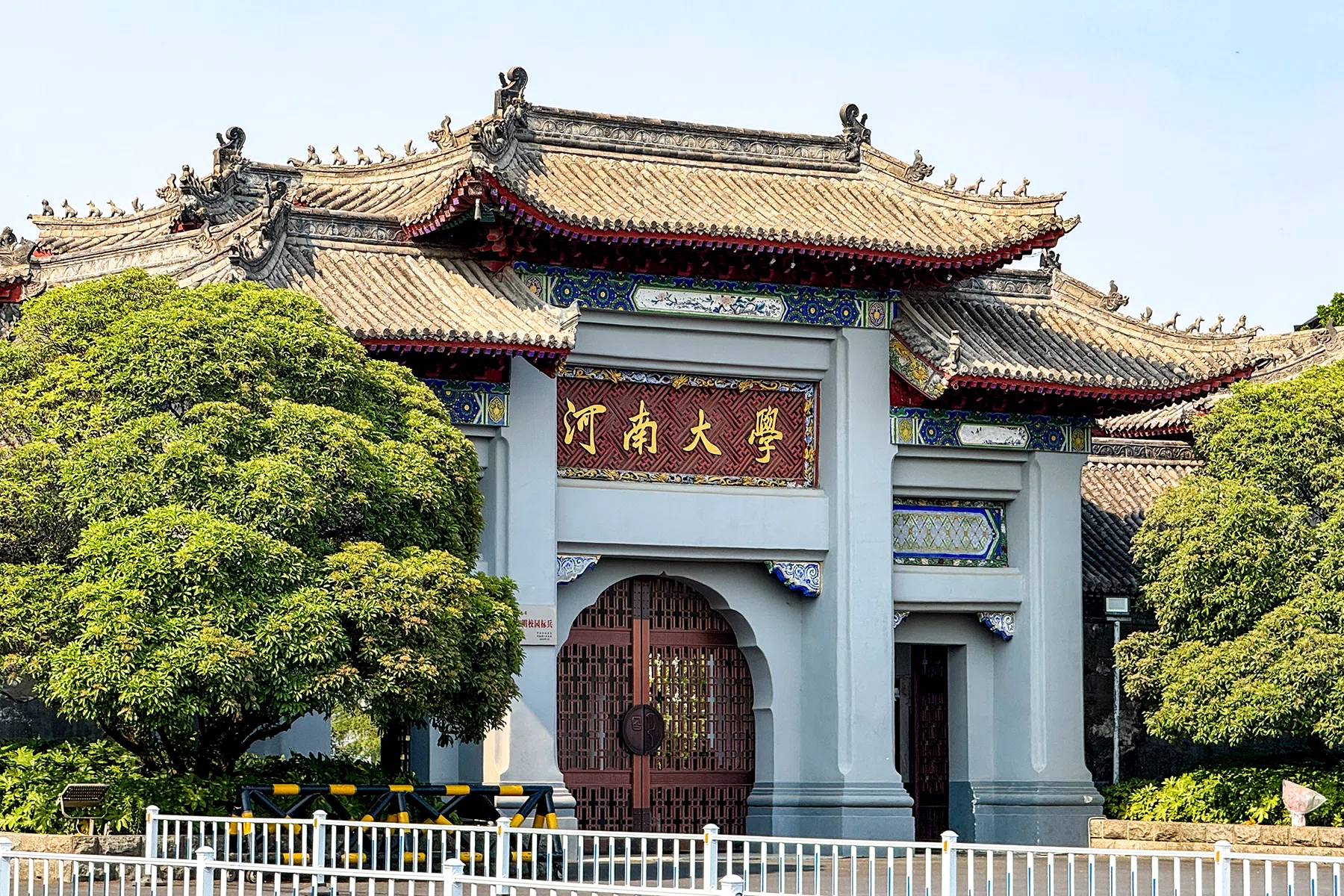
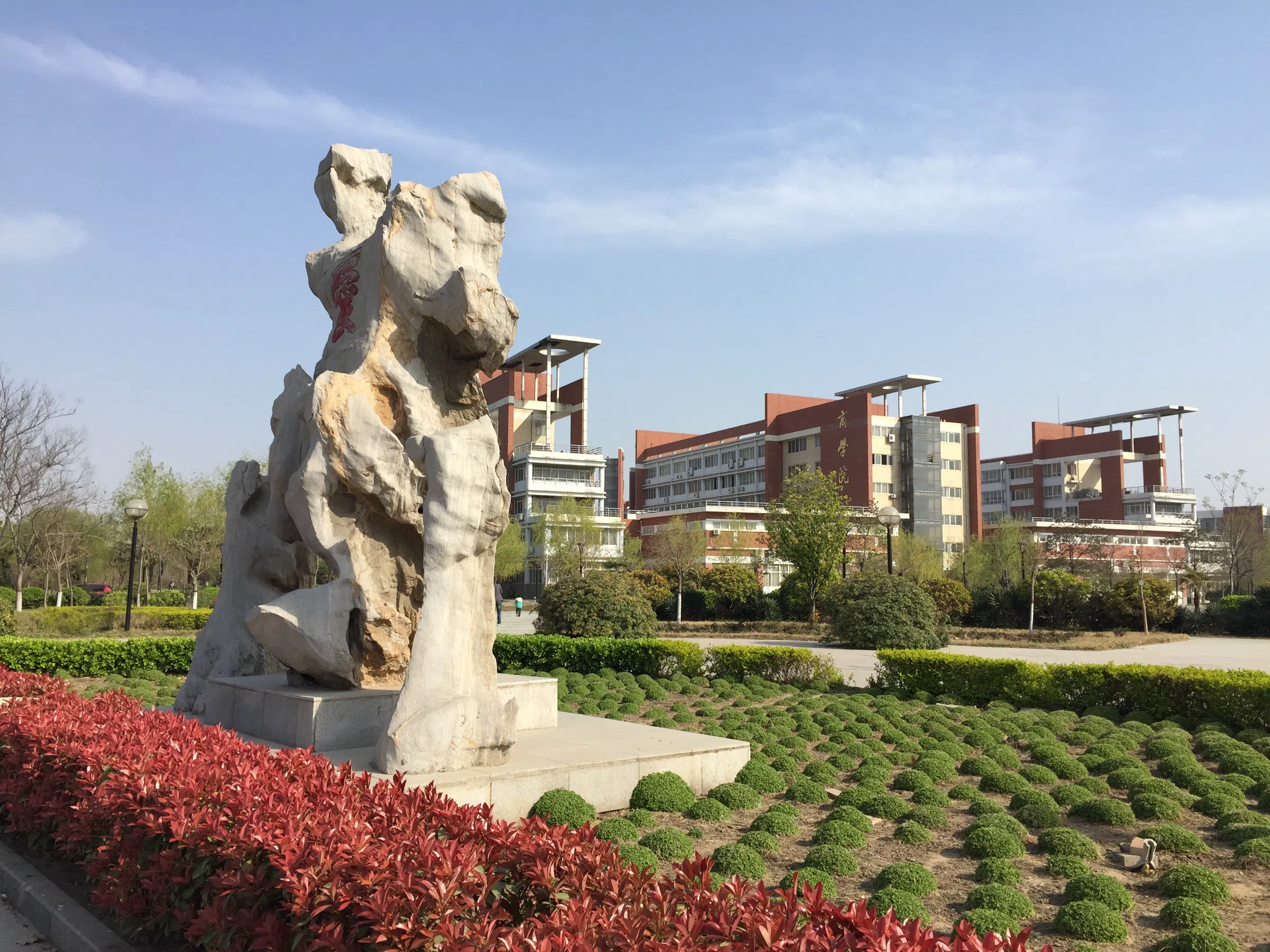
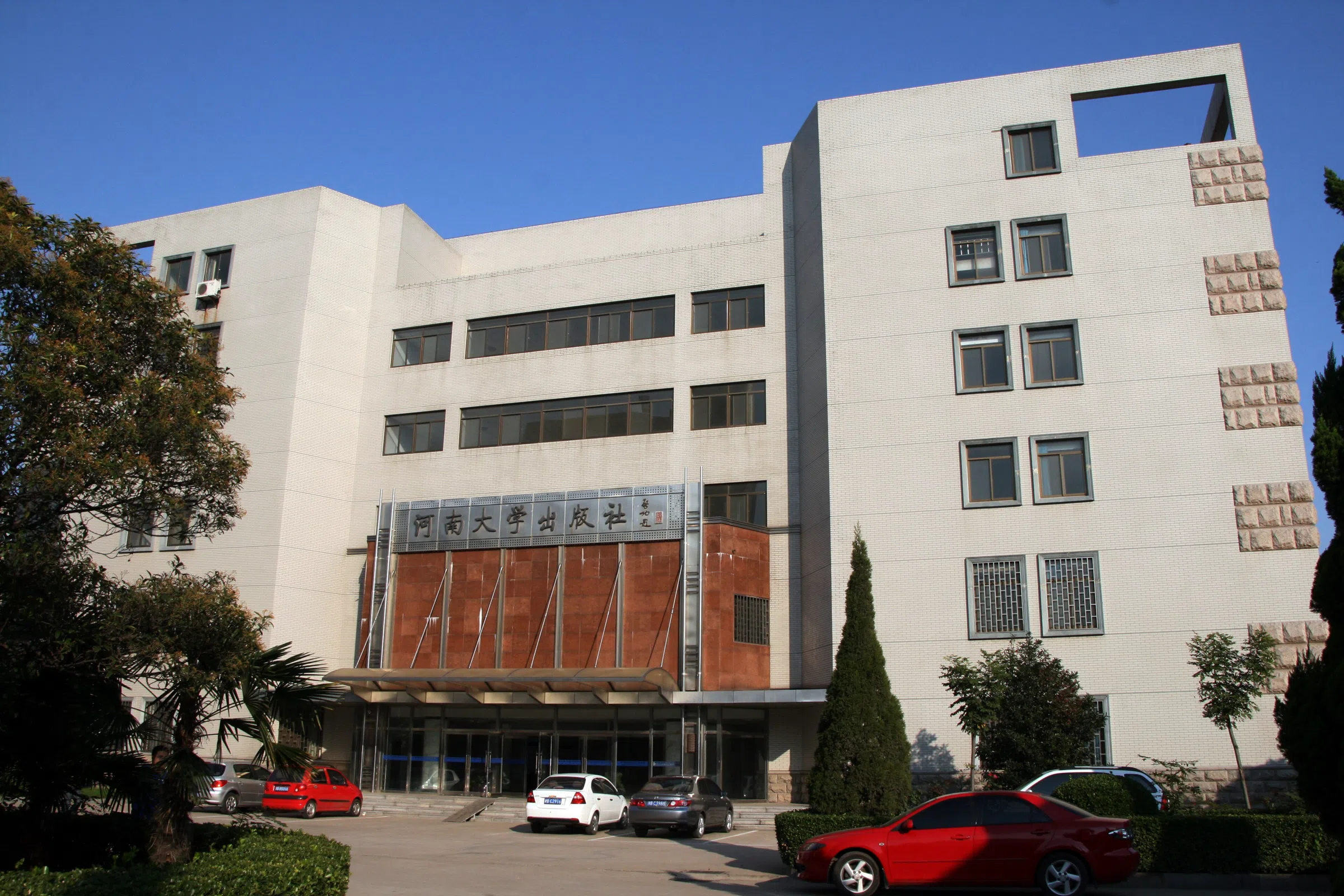
Henan University in photos
FAQ
Frequently asked questions
Will I study in Kaifeng or Zhengzhou?+
Most likely at least partly in Kaifeng, but check. The School of International Education, which admits international students and teaches Chinese, is on the Minglun Campus at No. 85 Minglun Street, Kaifeng, and every admissions document uses that address. HENU also has a second Kaifeng campus (Jinming) and the Longzihu Campus in Zhengzhou, and none of the documents we could read says which campus degree students are placed on. Ask the SIE which campus your school is on before you sign any housing arrangement.
How much is tuition at Henan University for international students?+
HENU has not published a 2026 fee table we could verify. The 2025–2026 undergraduate guide shows its fee table only as an image. The latest figures available in text come from the SIE’s 2019 Enrollment Guide: bachelor’s RMB 16,000–17,600 a year, master’s RMB 20,000–24,800, doctoral RMB 22,400–25,600 (depending on discipline) and long-term Chinese language study RMB 11,000 a year. Add an RMB 800 registration and administration fee and RMB 800 a year of insurance. Treat these as a guide only and ask admissions@henu.edu.cn for the current figures.
What language level do I need?+
It depends on level and route. Under the 2026/2027 Chinese Government Scholarship guide, Chinese-taught master’s and doctoral programs require HSK 5 with at least 180 points. That is higher than the HSK 4 in the previous edition, and holders of a Chinese-medium degree from a Chinese university are exempt. English-taught programs require native English, IELTS 6.5 or TOEFL 86. For undergraduates, the 2025–2026 guide sets the bar at graduation: HSK 5 or above for Chinese-medium programs and HSK 4 or above for English-medium ones.
Is there an age limit?+
Yes. Undergraduate applicants should generally be no older than 25, counted from 1 September of the year of entry, and applicants under 18 must provide proof of guardianship (2025–2026 guide). For the Chinese Government Scholarship, master’s applicants must be under 35 and doctoral applicants under 40. The older 2019 self-funded guide allowed up to 30, 40 and 45 respectively. Confirm the current self-funded limits with the SIE.
When is the application deadline for 2026?+
The Chinese Government Scholarship High-Level Postgraduate Program closed on 16 January 2026, and results are due by the end of July 2026. No 2026–2027 self-funded guide could be retrieved, so contact the SIE for the current self-funded deadline. Applications are made on henu.17gz.org, and admission letters and JW202 forms are issued electronically only.
What scholarships can I apply for at HENU?+
There are four main routes. First, Chinese Government Scholarships through HENU (High-Level Postgraduate Program, and the Silk Road Program for Belt and Road citizens in economics fields), covering tuition, housing, living expenses and insurance. Second, the Henan Excellent International Students Sponsorship; in its 2023 edition it pays tuition and housing, plus RMB 1,500 a month for master’s or RMB 2,000 for doctoral students. Third, the Henan University Scholarship; in its 2022 edition it pays tuition, a double room and RMB 3,000 (master’s) or RMB 3,500 (doctoral) a month. Fourth, HENU is a host university for the International Chinese Language Teachers Scholarship. Only the High-Level Postgraduate Program has a verified 2026 guide.
How much does a dormitory cost?+
The only published prices are older SIE figures. The 2019 Enrollment Guide gives RMB 10 a day for a four-bed room, RMB 20 for a double and RMB 40 for a single. The SIE fee notice gives RMB 3,000, RMB 6,000 and RMB 12,000 a year respectively, plus a RMB 500 deposit. Scholarship students have housing covered: a four-bed room for provincial-scheme language students and undergraduates, a double room for postgraduates.
Contact
Contact the admissions offices
Reach the School of International Education (SIE), Henan University — International Student Admissions for questions about applications, documents, scholarships and arrival. Type university programs and offices are based on campus in Kaifeng.
- Office
- School of International Education (SIE), Henan University — International Student Admissions
- Address
- School of International Education, Henan University, No. 85 Minglun Street, Kaifeng, Henan 475001, P.R. China
- admissions@henu.edu.cn — international admissions and scholarship applications (2026/2027 CGS guide and 2025–2026 undergraduate guide)dwhy@henu.edu.cn — SIE general address given on older admissions and scholarship pages
- Phone
- +86-371-22868169 — international admissions and scholarships (2026/2027 CGS guide)+86-371-22868958 — SIE, listed on the older self-funded fee notice and 2019 Enrollment Guide+86-371-22190665 — SIE fax (2019 Enrollment Guide)+86-371-22868833 — Henan University main line (university International Exchange page)
Verified from official sources · last checked 2026-09-15
Tuition, fees and deadlines change every intake. Always confirm the current figures on the official Henan University pages before applying.
- 2026/2027 Admissions Guide — CGS High-Level Postgraduate Program
- 2025/2026 Admissions Guide — CGS High-Level Postgraduate Program
- 2025–2026 Undergraduate Admissions Guide for International Students
- Enrollment Guide (2019)
- Payment Notice for self-supporting students
- Information for self-funded international students
- 2022 Henan University International Students Scholarships
- Henan Excellent International Students Sponsorship procedures
- Henan Government Scholarship application procedures (2018)
- 2023/2024 CGS Silk Road Program admissions guide
- Chinese-medium bachelor’s degree programs
- HENU sets up Silk Road College jointly with KNU
- Henan University international student online service platform
- 2025 International Chinese Language Teachers Scholarship notice (application platform)
- English Taught Programs, Henan University (application platform PDF)
- International Chinese Language Teachers Scholarship — Henan University host page
- Henan University — International Exchange
- Henan University 2026 undergraduate admissions charter (Henan provincial platform)
- About HENU (Human Resources Office, English)
- Henan University — CHSI school information
- QS TopUniversities — Henan University
- Wikipedia — Henan University (history)