
About
About Beijing Normal University
Beijing Normal University (北京师范大学) grew out of the Education Department of the Imperial University of Peking, founded in 1902 — the first institution in China whose declared mission was training teachers. It became the Supreme Education School of Peking in 1908, and in 1923 was renamed National Beijing Normal University, the first normal university in Chinese history — those are the English renderings on the BNU History page; the ISO history page translates the same names differently and adds a 1912 change to Peking Normal College. Peking Women’s Normal University merged into it in 1931 and Fu Jen Catholic University in 1952.
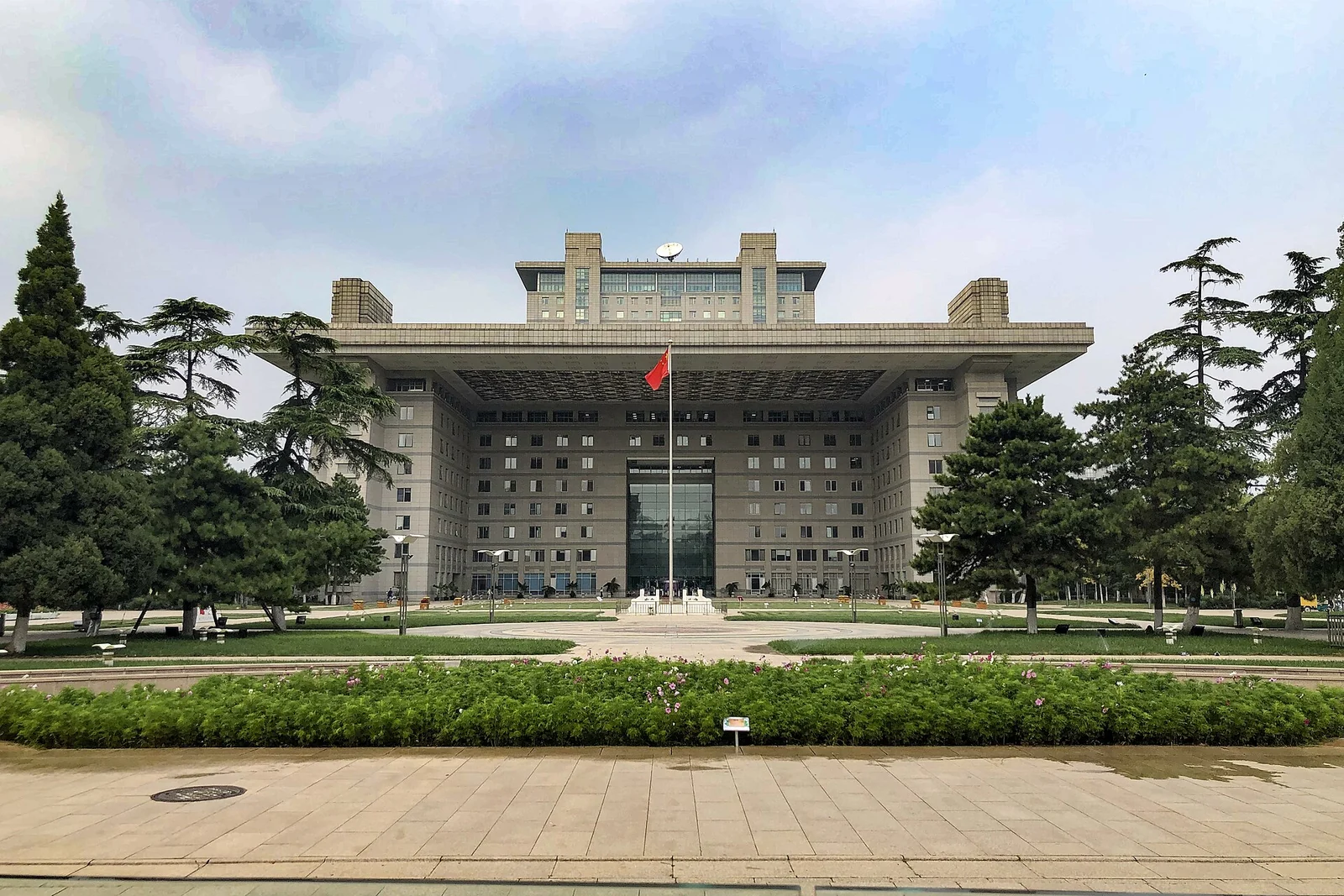
BNU’s campus was established at BeiTaiPingZhuang in 1954, and the admissions office address is No. 19 Xinjiekouwai Street, Haidian District, Beijing 100875. The university lists its Beijing campus area as 794,355 square metres.
BNU is organised into 3 faculties, 29 schools, 9 research institutes and 5 academies — 33 faculties, colleges, schools and departments in total plus 10 institutes — and concentrates on the basic disciplines in the sciences and humanities, on teacher education and on educational science. It first enrolled in Project 211 in 1996. The two official history pages date Project 985 differently: the BNU History page on the English site says it entered Project 985 in 2002, while the ISO History of BNU page dates Phase I to 1999 and Phase II to 2004. In 2017 it was listed among the Class A "world-class universities" (36 in total) in the national Double First-Class Initiative, with 11 disciplines selected — 8th in China.
Two BNU pages give different headline figures, so treat both as approximate. The General Information page says "more than 34,000 full-time students", "2762 full-time teachers" and "more than 7.7 million books and 9.3 million e-books"; the Facts and Figures page lists 15,905 undergraduates and 19,349 graduates, 2,582 full-time faculty and a 5,400,000 library collection. BNU does not reconcile the two.
A second campus operates in Zhuhai, Guangdong, in the Greater Bay Area. This matters more to international applicants than it does to domestic ones: several of the programs most often taken by foreign students are taught in Zhuhai, in southern Guangdong, not on the Beijing campus. The undergraduate Major Catalog marks Teaching Chinese to Speakers of Other Languages as a Zhuhai-campus major; the Chinese Language & International Education bachelor’s is described as Zhuhai-based on the International Chinese Language Teachers Scholarship page, and does not appear in the undergraduate Major Catalog; and the Belt and Road School’s English-taught MBA and MPA are at Zhuhai.
11 disciplines selected — 8th in China, as stated by BNU
The BNU History page dates Project 985 entry to 2002; the ISO history page gives Phase I in 1999 and Phase II in 2004
Members of the Chinese Academy of Sciences and the Chinese Academy of Engineering, including double-hired members, as listed on the Facts and Figures page
China’s first normal university
Founded in 1902 as the Education Department of the Imperial University of Peking, and renamed National Beijing Normal University in 1923 — the first in the country.
Double First-Class Class A
Listed in 2017 among the 36 Class A "world-class universities" in the national Double First-Class Initiative, with 11 disciplines selected, following Project 211 in 1996 and Project 985.
Education, psychology and Chinese language
The academic centre of gravity is teacher education, educational science, psychology and Chinese language teaching, backed by national research bases in each.
Two campuses: Beijing and Zhuhai
A Haidian District campus in Beijing and a second campus in Zhuhai in the Greater Bay Area, which hosts several programs aimed at international students.
Admission
Admission, programs & tuition
Beijing Normal University admits international students to bachelor’s, master’s and doctoral degrees and to a range of non-degree programs. Applications go through the online system at international.bnu.edu.cn. Two features shape admission here more than at most Chinese universities. First, BNU is overwhelmingly a Chinese-medium university at undergraduate level: nearly every bachelor’s major requires HSK Level 5, and there is no general English-taught bachelor’s degree. Second, undergraduate admission runs through the CSCA (China Scholastic Competency Assessment) written examination plus a BNU interview, rather than a university-set entrance exam.
Degree programs
Select a degree level to see tuition, duration and entry requirements.
Bachelor’s degreeUndergraduate
Four-year undergraduate degrees taught in Chinese across the humanities, education, sciences, arts and languages. Admission is decided by the CSCA written examination together with a BNU interview. Most majors are on the Beijing campus; Teaching Chinese to Speakers of Other Languages is taught at the Zhuhai campus.
- Humanities & social sciences
- RMB 24,000 / year (2026 intake)
- Science, engineering & arts
- RMB 27,700 / year (2026 intake)
Application requirements
- Non-Chinese citizenship with a valid foreign passport; aged 18 to 40 (date of birth after 31 August 1986). Applicants under 18 as of 1 September 2026 need a notarised guardian certificate — in Beijing for a Beijing-campus major, in Guangdong province for a Zhuhai-campus major.
- Applicants with one or both parents holding Chinese citizenship and residing outside China, who acquired foreign nationality at birth, must have held the foreign nationality for at least 4 years and have lived abroad for at least 2 of the last 4 years (30 April 2022 to 30 April 2026), evidenced by entry and exit stamps.
- A certificate equivalent to a Chinese high-school graduation certificate or above, with transcripts. The passport must not expire before 31 March 2027.
- Chinese as a Second Language and Teaching Chinese to Speakers of Other Languages majors: HSK Level 4 with 180 points or above. All other majors: HSK Level 5 with 180 points or above.
- The brochure sets one validity rule covering both of those thresholds: "The exam date on the HSK certificate should be no earlier than November 1, 2023." A pre-November-2023 HSK 4 is no more acceptable than a pre-November-2023 HSK 5.
- Several majors add conditions the general list does not, and they are printed only in the Major Catalog: the English, Japanese and Russian majors are closed to applicants whose native language is that same language; the School of Arts and Communication majors (theatre film and TV literature, digital media arts, calligraphy, fine arts, design, musicology, dance) require a "certain level of expertise" evidenced by supporting materials; and Psychology requires a Mathematics and Physics average of 80% or above on the high-school transcript, with both courses named on it and no substitutions. Read your own major’s row before applying.
- A valid CSCA (China Scholastic Competency Assessment) report — check the Major Catalog for the subjects each major requires.
- A teacher recommendation, a handwritten personal statement (print versions are not accepted), a passport copy, and a certificate of non-criminal record — for undergraduate applicants the brochure accepts a Letter of Commitment in place of that certificate.
- Admission is decided on the CSCA result together with a BNU interview. You may apply for two majors, and must sit the interview for each of them.
Master’s degreeGraduate
The brochure defines three categories, not two: academic Chinese-taught master’s degrees run three years, while academic English-taught programs and professional programs in either language run two. Most Chinese-taught tracks are billed per academic year, but the English-taught tracks and the Chinese-taught International Chinese Language Education master’s are priced as a single programme total instead.
- Humanities (Chinese-taught)
- RMB 25,300 / year
- Science, engineering, medicine & arts (Chinese-taught)
- RMB 32,300 / year
- English-taught master’s programs
- RMB 60,000 for the two-year programme
- International Chinese Language Education master’s (Chinese-taught)
- RMB 65,000 for the two-year programme — outside the Chinese-taught per-year range above and billed as a total (the ISO fee schedule states the same amount as RMB 32,500 / year)
Application requirements
- Non-Chinese citizen with a foreign passport, under 50 years old (born after 31 August 1976), holding a bachelor’s degree or equivalent.
- Chinese-taught programs: HSK Level 5 with 195 points or above for most schools.
- School of Chinese Language and Literature: HSK Level 5 with 210 points or above.
- School of International Chinese Language Education: HSK Level 6 with 220 points or above and HSKK Advanced with 65 points or above.
- English-taught programs: applicants from non-English-speaking countries submit the English proficiency evidence set for that major in the MA English-Taught Program listing. The brochure grants two exemptions the general wording hides — applicants from English-speaking countries are not asked for proof at all, and applicants who were "fully taught in English to get their previous academic degree" submit a certificate issued by the graduating institution instead of an IELTS or TOEFL score.
- Test-date validity binds graduate applicants exactly as it binds undergraduates: the HSK certificate must be dated "no earlier than November 1, 2023 (inclusive)", and an IELTS or TOEFL report must be dated after 1 November 2023 (inclusive). An HSK 6 with HSKK Advanced sat before that date does not qualify, so allow time to re-sit before paying the non-refundable RMB 600 application fee.
- The passport must not expire before 31 March 2027 — the master’s and doctoral brochure sets the same date as the undergraduate one.
- Notarised degree certificate and transcripts, two recommendation letters from associate professors or above, a personal statement, passport copy and a certificate of non-criminal record usually issued within the 6 months before you submit.
- Chinese Government Scholarship applicants must be under 35 (born after 31 August 1991) and submit by the earlier scholarship deadline of 25 January 2026.
Doctoral degreeGraduate
Doctoral study across education, psychology, the humanities, the sciences and environmental and geographical science. Most programs run three years; Teaching Chinese to Speakers of Other Languages runs four.
- Humanities (Chinese-taught)
- RMB 32,300 / year
- Science, engineering, medicine & arts (Chinese-taught)
- RMB 41,400 / year
- English-taught doctoral programs
- RMB 98,000 for the three-year programme
Application requirements
- Non-Chinese citizen with a foreign passport, under 50 years old (born after 31 August 1976), with a master’s degree or above.
- Chinese-taught programs: HSK Level 5 with 195 points or above for most programs; Chinese Language and Literature requires 210 points.
- International Chinese Language Education: HSK Level 6 with 240 points and HSKK Advanced with 65 points — 20 points above the master’s threshold at the same school.
- English-taught programs: applicants from non-English-speaking countries submit the English proficiency evidence set for that major in the PhD English-Taught Program listing. Applicants from English-speaking countries are not asked for proof, and applicants who were "fully taught in English to get their previous academic degree" submit a certificate issued by the graduating institution instead of an IELTS or TOEFL score.
- Test-date validity: the HSK certificate must be dated "no earlier than November 1, 2023 (inclusive)", and an IELTS or TOEFL report must be dated after 1 November 2023 (inclusive).
- The passport must not expire before 31 March 2027.
- Notarised degree certificate and transcripts, two recommendation letters from associate professors or above, a personal statement and a police clearance certificate usually issued within the 6 months before you submit.
- Chinese Government Scholarship applicants must be under 40 (born after 31 August 1986).
Non-degree programs
Chinese language study (general intensive)
Long-term Chinese language study, billed per half-year or per year. The ISO fee schedule prices the Chinese-language refresher track (汉语进修生) at RMB 11,600 per half-year and RMB 22,400 per year, with no science rate listed for it, and the general refresher track (普通进修生) at RMB 11,600 / RMB 22,400 for humanities and RMB 13,050 / RMB 25,300 for science. The application fee is RMB 450: the ISO 报名费 table is a four-column table, and Chinese-language, general and advanced refresher students all sit in the same RMB 450 column.
Fee · RMB 22,400 / year (humanities); RMB 25,300 / year (science, general refresher track only)
Advanced Chinese language study
A higher-level track (高级进修生) for students who already have substantial Chinese, priced at RMB 14,900 per half-year for humanities and RMB 19,000 for science, engineering, medicine and arts. Application fee RMB 450 — on the ISO 报名费 table advanced refresher students share the RMB 450 column with the Chinese-language and general refresher tracks.
Fee · RMB 29,000 / year (humanities); RMB 37,200 / year (science, engineering, medicine & arts)
English-taught credit program
Bachelor’s and graduate-level courses taught in English in fields including education, economics, environmental science, philosophy and law. Open to students in their second year of college or above, aged 18–45. Autumn intake applications run 10 March – 30 June 2026; spring intake applications ran 10 October – 15 December 2025. Two official pages disagree on the application fee: the 2026 programme brochure states RMB 450 (waivable for exchange students under the relevant agreement), while the ISO fee schedule puts the English-taught credit program (英文学分项目) in the same RMB 500 column as undergraduate degree students — confirm with the admissions office before paying.
Fee · RMB 1,800 per credit; application fee RMB 450 (brochure) or RMB 500 (ISO fee schedule) — the two pages disagree
Short-term Chinese intensive
Short intensive Chinese courses with an application fee of RMB 350 — short-term refresher students (短期进修生) are the fourth column of the ISO 报名费 table, and the summer programme page states the same RMB 350. The ISO fee schedule lists 2 weeks RMB 2,300, 3 weeks RMB 2,900, 4 weeks RMB 3,500 and 5 weeks RMB 4,125; the summer programme page lists no two-week option and gives 3 weeks RMB 2,900, 4 weeks RMB 3,500, 5 weeks RMB 4,100, 8 weeks RMB 7,000 and 9 weeks RMB 7,600 — the two pages disagree on the five-week figure (4,125 against 4,100). Summer programmes add a compulsory activity fee of RMB 600 covering three off-campus visits (the summer page names the Great Wall, the Forbidden City and the Summer Palace) and three cultural performances, with optional culture electives at RMB 30 per class hour and 2 class hours per week (RMB 180 for three weeks up to RMB 540 for nine).
Fee · RMB 2,300 for 2 weeks on the ISO fee schedule; RMB 7,600 for 9 weeks on the summer programme page — no single page publishes both ends of that range
Research scholars
Visiting general and senior research scholars (研究学者) attached to a host school, billed monthly rather than by academic year. Application fee RMB 600 — the ISO 报名费 table groups research scholars with master’s and doctoral applicants in the RMB 600 column.
Fee · RMB 3,200 / month (humanities); RMB 3,500 / month (science, engineering, medicine & arts)
Documents to prepare
- Valid foreign passport (biographical page) — both the undergraduate and the master’s and doctoral brochure require that it not expire before 31 March 2027.
- Notarised graduation or degree certificate, with a predicted graduation certificate accepted at application if you have not yet graduated — originals must be produced by enrolment or admission is cancelled.
- Full academic transcripts, notarised.
- HSK certificate at the level required by your programme. Both brochures apply the same validity window at every level, undergraduate and graduate alike: the test date must be no earlier than 1 November 2023 (inclusive). For English-taught programs, an IELTS or TOEFL report dated after 1 November 2023 (inclusive), unless you are from an English-speaking country or hold an institution-issued certificate that your previous degree was taught fully in English.
- A valid CSCA report for undergraduate applicants.
- Personal statement — handwritten for undergraduate applicants.
- Recommendation letters — one from a teacher for undergraduates, two from associate professors or above for graduate applicants, each with the recommender’s title, contact details and signature.
- Certificate of non-criminal record — undergraduates may submit a Letter of Commitment instead, and the graduate brochure asks for one issued within the 6 months before submission.
- A physical examination record is not part of the standard application file: both brochures require the Foreigner Physical Examination Form only from Chinese Government Scholarship applicants, and it is valid for 6 months. Every student needs one at registration, where the ISO also charges RMB 60 in cash to verify an examination done abroad.
Application timeline
These are the dates Beijing Normal University published for the 2026 intake. That cycle has closed. Use them as a guide to when each step falls in the year, and check the official pages for the 2027 dates before you plan around them.
- 1
Undergraduate online application window
15 Nov 2025 – 15 Mar 2026Paper documents are submitted after the initial online review is passed.
- 2
Master’s and doctoral online application window
15 Nov 2025 – 10 Mar 2026Applies to Chinese-taught and English-taught graduate programs, including the Belt and Road School MBA and MPA.
- 3
Chinese Government Scholarship deadline
By 25 Jan 2026Graduate applicants seeking the CSC scholarship must submit their online application by this earlier date.
- 4
English-taught credit program — spring intake applications
10 Oct – 15 Dec 2025For the semester starting March 2026.
- 5
English-taught credit program — autumn intake applications
10 Mar – 30 Jun 2026For the semester starting September 2026.
- 6
Admission results issued
From June 2026 (undergraduate)The undergraduate brochure says the admission office will notify applicants of the result through the application system and by email starting from June 2026. The master’s and doctoral brochure gives no date: schools carry out an academic review after the initial review and organise an interview where necessary, and BNU then informs applicants through the online application system and by email, adding that telephone enquiries about results are not accepted.
Tuition is charged per academic year for most Chinese-taught programs but as a single programme total for the English-taught master’s (RMB 60,000 over two years) and doctoral (RMB 98,000 over three years) tracks — compare them on total cost, not per-year cost. One Chinese-taught programme breaks that rule and sits outside the Chinese-taught range: the International Chinese Language Education master’s — taught in Chinese, and gated by the School of International Chinese Language Education’s threshold of HSK 6 with 220 and HSKK Advanced with 65 — is priced in the brochure at RMB 65,000 for two years, about RMB 14,400 more than the RMB 25,300 per year a humanities budget would suggest. The ISO fee schedule states the same amount as RMB 32,500 per year. Note also how narrowly the RMB 60,000 English-taught master’s figure is evidenced: the brochure states it as one row of a table, while the ISO fee schedule names the six schools it applies to — Education, Social Development and Public Policy, Environment, Economics and Business Administration, Geography and Remote Sensing Science, and Law — and does not list the Belt and Road School. The Belt and Road School brochure publishes no tuition figure of its own, only its full and partial scholarships, so MBA and MPA applicants should ask the school what they would pay unfunded. The ISO fee schedule sets application fees in a four-column table: RMB 450 for Chinese-language, general and advanced refresher students; RMB 500 for undergraduate degree students and the English-taught credit program; RMB 600 for master’s and doctoral applicants and for visiting research scholars; and RMB 350 for short-term refresher students. The English-taught credit program brochure states RMB 450 rather than the ISO’s RMB 500 for that one track. Fees are paid online after the application is submitted and are not refundable. Budget separately for accommodation, compulsory medical insurance and living costs. Always confirm the current figure on the official brochure for your intake before applying.
Funding
Scholarships
International students at Beijing Normal University can apply for Chinese Government, Beijing municipal, Chinese-language and university scholarships. The master’s and doctoral admission brochure names six schemes — the Chinese Government Scholarship, the International Chinese Language Teachers Scholarship, the Confucius China Studies Program, the Beijing Government Scholarship, the BNU New International Students Scholarship and the BNU “Silk Road Muduo” Scholarship. The undergraduate brochure names five of the six, omitting the Confucius China Studies Program. Note the earlier deadline: graduate applicants seeking the Chinese Government Scholarship must submit their online application by 25 January 2026, ahead of the general graduate deadline of 10 March 2026.
Chinese Government Scholarship (CSC)
BNU’s page for the Type A Bilateral Program lists tuition, a free university dormitory or an accommodation subsidy, a stipend and comprehensive medical insurance. Amounts are set in the China Scholarship Council’s own application guide, not by BNU.
Eligibility: Non-Chinese citizens who meet BNU’s admission requirements and hold no other scholarship. The Bilateral Program page gives age limits of under 25 for bachelor’s, under 35 for master’s, under 40 for doctoral, under 45 for general scholars (high school diploma or higher) and under 50 for senior scholars (a master’s degree holder, or an associate professor or above); the graduate brochure states under 35 (born after 31 August 1991) for master’s and under 40 (born after 31 August 1986) for doctoral applicants. You apply first to the dispatching authority for overseas study in your home country, between November and April. The 25 January 2026 BNU deadline is a graduate deadline: it is set in the master’s and doctoral brochure, and the undergraduate brochure publishes no separate CSC date, leaving undergraduate CSC applicants inside the general 15 March 2026 window. Confirm your own date with the admission office rather than assuming the earlier one applies to you.
Beijing Government Scholarship — Type A
Tuition, accommodation (a dormitory place or an accommodation subsidy), a living allowance and comprehensive medical insurance.
Eligibility: Non-Chinese citizens newly admitted to BNU and enrolling in the year of admission: under 25 for bachelor’s, under 35 for master’s, under 40 for doctoral and under 45 for non-degree study, where non-degree applicants must also hold the equivalent of a bachelor’s degree or be current undergraduate or graduate students. Cannot be held with another Chinese government or social-organisation scholarship. Funding does not exceed the standard duration of the programme — one academic year for non-degree students — and every holder must pass an annual assessment to keep it; doctoral students in exceptional circumstances may apply to extend.
Beijing Government Scholarship — Type B
Tuition, accommodation (dormitory or subsidy) and comprehensive medical insurance.
Eligibility: Newly admitted international students at BNU, subject to the same age limits as Type A.
Beijing Government Scholarship — Type C
Tuition and comprehensive medical insurance.
Eligibility: Newly admitted international students at BNU, subject to the same age limits as Type A.
International Chinese Language Teachers Scholarship
Funding by programme length: four years for the doctorate in International Chinese Education, two years for the master’s, four years for the Chinese Language & International Education bachelor’s at the Zhuhai campus, eleven months for one-year research students and five months for one-semester research students.
Eligibility: Non-Chinese citizens aged 16–35 as of 1 September 2026, relaxed to 45 for in-service Chinese-language teachers; bachelor’s applicants are generally not over 25. Doctoral: HSK Level 6 with 240 and HSKK Advanced with 65, plus three or more years of full-time work in international Chinese education or a related field. Master’s: HSK Level 6 with 220 and HSKK Advanced with 65. Bachelor’s: HSK Level 4 with 210 and HSKK Intermediate with 60. Requirements for the research-student categories vary by specialisation track.
Belt and Road School scholarships
Full scholarships cover a tuition waiver for two academic years, health insurance and a stipend for housing and living; partial scholarships cover a tuition waiver for two academic years, health insurance and a partial living stipend.
Eligibility: All applicants to the English-taught MBA and MPA at the Zhuhai campus are automatically considered; 30 places per programme.
Confucius China Studies Program
BNU’s page for the programme’s Ph.D. Fellowship in China strand states that the fellowship covers tuition fees, living expenses and international travel expenses; no amounts are published.
Eligibility: Named in the master’s and doctoral admission brochure as one of BNU’s six scholarship schemes. For the Ph.D. Fellowship in China strand: non-Chinese citizens holding a master’s degree or graduating from one, with HSK Level 5 or above (stronger Chinese preferred), applying through http://csp.chinese.cn/myDoip rather than the BNU system. Materials are reviewed by the host institution and a China Studies Program expert committee, with an expert review each March, interviews within a month after it, and enrolment usually in September.
BNU New International Students Scholarship
Tuition waiver, a living stipend during the study period and comprehensive medical insurance, for a duration equal to the duration of study. BNU does not publish stipend amounts.
Eligibility: Non-Chinese citizens already admitted to a BNU degree program starting in the current year, with an outstanding academic record — excellent entrance-examination scores for undergraduates, an outstanding previous transcript and research ability for master’s and doctoral applicants — who are not receiving any other scholarship or funding. Recipients must pass an annual review each May to keep the award.
BNU “Silk Road Muduo” Scholarship
Tuition waiver, a living stipend during the study period and comprehensive medical insurance, for a duration equal to the duration of study. BNU does not publish stipend amounts.
Eligibility: Non-Chinese citizens who are citizens of Belt and Road countries, already admitted to a BNU degree program starting in the current year, with good conduct and outstanding results, and not receiving any other scholarship or financial aid. The deadline follows the admission brochure for the intake; recipients take an annual review each May.
Research
Research at the university
Beijing Normal University’s research profile is shaped by its origins in teacher training: it is unusually strong in learning science, psychology, educational technology and Chinese language and literature, and pairs that with earth-surface, remote-sensing and environmental science. The Facts and Figures page gives the platform counts as "13 National laboratories/research base", "43 Laboratories/research base of Ministry of Education" and "25 Laboratories/research base of Beijing Municipality". Those totals do not match the Key Research Facilities page, which names the platforms one by one and comes to roughly 26 at Ministry of Education level and 22 at Beijing municipal level. BNU does not reconcile the two pages, so treat the headline totals as the Facts and Figures figures rather than as a verified count.
Cognitive neuroscience & learning
The State Key Laboratory of Cognitive Neuroscience and Learning studies how people learn — the research core that distinguishes BNU from China’s general comprehensive universities.
Earth surface & environment
The State Key Laboratory of Earth Surface Processes and Resource Ecology and the State Key Joint Laboratory of Environmental Simulation and Pollution Control.
Remote sensing
The State Key Joint Laboratory of Remote Sensing Science, plus the National Field Observation Station of Biodiversity of Amur Tiger and Leopard.
Education, culture & language
National key research bases in the humanities and social sciences covering international and comparative education, teacher education, developmental psychology, literature and art, folklore and Chinese characters, historiography, and values and cultures.
- Four state key laboratories, in cognitive neuroscience and learning, earth surface processes, environmental simulation and remote sensing science.
- A National Engineering Laboratory for Cyberlearning and Intelligent Technology — educational technology at national scale.
- Two national research bases for school teaching materials, covering integrated moral education and Chinese for primary and secondary schools.
- 21 academicians of the Chinese Academy of Sciences and the Chinese Academy of Engineering, including double-hired members, on the Facts and Figures page.
Global engagement
Global engagement
Beijing Normal University has cooperative ties with nearly 160 universities and international organisations from more than 40 countries and regions, and runs two distinctive international ventures of its own: the Belt and Road School at the Zhuhai campus, and a long-standing role in Chinese-language teacher training worldwide.
Belt and Road School
English-taught MBA and MPA programs at the Zhuhai campus, each admitting 30 students per academic year. The brochure states that both programs require a two-year full-time study, and that all applicants are considered for full or partial scholarships. Its eligibility list is narrower than the general graduate one: applicants need a bachelor’s degree or above and working experience, including an internship, is required rather than merely preferred, with one year or longer preferred. Non-native English speakers must show TOEFL 90 or IELTS 6.0, or a certificate from the school attended proving the medium of instruction was English.
International Chinese language education
A dedicated School of International Chinese Language Education, and a bachelor’s in Chinese Language & International Education at Zhuhai supported by the International Chinese Language Teachers Scholarship.
Zhuhai campus in the Greater Bay Area
A second campus at No. 18 Jinfeng Road, Xiangzhou District, Zhuhai, Guangdong — the base for several programs aimed specifically at international students.
English-taught credit exchange
Semester and year-long English-taught credit study in education, economics, environmental science, philosophy and law for visiting students from partner and non-partner universities.
Career
Career & alumni
Beijing Normal University was founded to train teachers and that remains its centre of gravity — education, educational technology, psychology and Chinese language teaching are the fields its graduates are best known for, and the International Chinese Language Teachers Scholarship exists specifically to fund students into international Chinese-language education, with the doctoral track requiring three or more years of prior full-time work in that field. The only careers material BNU publishes in English for international students is the ISO’s Internship & Employment section, which holds two items — "Employment Opportunity" and "Internship Visa Application" — both dated 24 November 2020. No placement rates, salary figures or graduate-destination data are published, so ask your school’s international office directly about placement support, internships and post-graduation work-permit rules before you enrol.
Career support
Notable alumni
Campus life
Campus life
The Beijing campus covers 794,355 square metres in Haidian District; the admissions office address is No. 19 Xinjiekouwai Street. The ISO dormitory page lists four apartment buildings for international students — Liyun No. 1 (A), Liyun No. 3 (B), Xinsong (C) and Lanhui (E) — but describes the facilities of only three of them. Liyun No. 3 (B) is listed as "Elevator/Public self-service laundry (each floor)/Public kitchen (each floor)", Xinsong (C) and Lanhui (E) as "Elevator/Public self-service laundry/Public kitchen" without the each-floor qualifier, and each of the three adds "Campus Wi-fi (BNU/BNU mobile) available". Liyun No. 1 (A) appears only as a name and a telephone number, with no facilities and no room types. The ISO fee schedule prices a fifth building that the dormitory page does not describe, 励耘学苑留学生第二公寓, and the university’s Housing & Dining page lists a fifth dorm with its own phone number as "No.2 International Students Dorm (H)". All three numbered Liyun buildings are 励耘学苑 in Chinese. Undergraduates admitted to a Zhuhai-campus major are housed separately: the undergraduate brochure says Zhuhai dormitories are arranged by Phoenix School at RMB 7,500 per person per year. Booking is at bnu.17gz.org, and two official pages give different windows — the 2026 undergraduate brochure says 9:00 on 1 July 2026 to 12:00 on 15 August 2026, while the Housing & Dining page gives 9:00 on 15 December 2025 to 23:00 on 22 February 2026. A third window, on the ISO dormitory page itself, is plainly stale — it still reads "Application date for new students: 9:00 AM May 28th 2019 to 12:00 PM July 31st 2019" — so ignore that one and check the window published for your own intake. Chinese Government Full Scholarship and International Chinese Language Teachers Scholarship holders do not book at all; the university assigns their rooms.
Accommodation
Liyun Apartment No. 1 (Building A)
Long-term RMB 40 / 55 / 65 per bed per day; short-term RMB 50 / 65 / 75
Long-term rates apply to stays longer than three months. The ISO dormitory page gives this building only a name and the apartment contact number +86-10-58807642 — unlike buildings B, C and E it has no facilities or room-type description there, so the room grades and rates above come from the ISO fee schedule alone.
No. 2 International Students Dorm (H) · 励耘学苑留学生第二公寓
Long-term RMB 55 / 75 per bed per day; short-term RMB 120
Priced on the ISO fee schedule as 励耘学苑留学生第二公寓 but not described on the ISO dormitory page, which covers only buildings A, B, C and E. The Housing & Dining page lists a "No.2 International Students Dorm (H)", apartment contact number +86-10-58809556. Confirm with the ISO that it is open to your intake.
Liyun Apartment No. 3 (Building B)
Long-term RMB 85 / 95 per bed per day; short-term RMB 140 / 150
The widest choice of room types on the ISO dormitory page. Apartment contact number +86-10-58805151.
Xinsong Apartment (Building C)
Long-term RMB 60 / 65 / 75 per bed per day; short-term RMB 120 / 130
Lift, public self-service laundry, public kitchen and campus Wi-Fi. Apartment contact number +86-10-58807890.
Lanhui Apartment (Building E)
Long-term RMB 60 per bed per day; short-term RMB 120
Lift, public self-service laundry, public kitchen and campus Wi-Fi. Apartment contact number +86-10-58806000.
Zhuhai campus dormitory
RMB 7,500 per person per year
For undergraduates admitted to a Zhuhai-campus major, as listed in the 2026 undergraduate admission brochure; the brochure gives no figure for graduate students at Zhuhai.
Dining
Campus canteens include Xin Le Qun and the 5th and 6th Student Canteens. BNU states that most canteens and restaurants accept campus card payment only, so arranging your card is an early priority. The ISO fee schedule puts general living expenses at roughly RMB 1,500–3,000 per month (typical).
Facilities
Library
BNU’s Facts and Figures page gives the library collection as 5,400,000; its General Information page instead claims "more than 7.7 million books and 9.3 million e-books". The two are not reconciled.
Health care & insurance
Comprehensive medical insurance in mainland China is compulsory for the whole of your stay and must be in place before registration. Scholarship students are charged RMB 800 per year; policies must meet minimum limits including RMB 400,000 for hospitalisation and RMB 20,000 for outpatient and emergency care.
Banking on arrival
Tuition can only be paid in RMB with a UnionPay debit card issued in China, so opening an account is an early priority. The ISO payment page says you can apply for a UnionPay debit card at the Bank of China (WenHuiYuan Branch), No. 4 WenHuiYuan South Road, Haidian District, "for free", taking your passport and admission notice — but the waiver it describes is time-limited: "Present your admission notice to get 1 year of card fee waive". The page also advises opening the account before registration, because a visa application can hold your passport for up to 30 days and no bank will process an application without it.
Arrival & registration
BNU has run a free pickup from the T3 arrival hall at Beijing Capital International Airport for students who register flight details in advance — the ISO page describing it still carries a 2016 date, so confirm it is running for your intake. Otherwise a taxi is "no more than 100 - 120RMB" and airport bus Line 4 is RMB 21 (alight at Bei Tai Ping Zhuang, then 10–15 minutes on foot). You must obtain a Temporary Residence Form within 24 hours of checking in, then register at the International Students Office with your passport, the signed original admission notice, the JW202/201 form, the original temporary residence form, two white-background passport photos, your insurance certificate and your physical examination report. The ISO registration page advises preparing about RMB 1,000 in cash for visa fees, since the amount depends on visa type, and charges RMB 60 in cash to verify a physical examination report done abroad.
FAQ
Frequently asked questions
How much is tuition at Beijing Normal University for international students?+
For the 2026 intake, undergraduate tuition is RMB 24,000 per year for humanities and social sciences and RMB 27,700 per year for science, engineering and arts. Most Chinese-taught master’s programs cost RMB 25,300–32,300 per year and doctoral programs RMB 32,300–41,400 per year. English-taught programs are priced as a programme total: RMB 60,000 for a two-year master’s and RMB 98,000 for a three-year doctorate. One Chinese-taught programme is priced neither way: the International Chinese Language Education master’s is RMB 65,000 for two years — the ISO fee schedule puts the same amount at RMB 32,500 per year — so budgeting it at the humanities rate leaves you about RMB 14,400 short.
How long is a master’s degree at Beijing Normal University?+
It depends on which of three categories your programme falls into, not simply on the language of instruction. The brochure states that academic Chinese-taught master’s programs run three years, academic English-taught programs run two, and "the study duration of professional Chinese-taught and English-taught programs is two years". So a professional Chinese-taught master’s is a two-year degree, not three; the Chinese-taught International Chinese Language Education master’s is one the brochure prices explicitly over two years. Check the category of your own programme in the Majors Catalog before you plan a visa, housing or funding for a third year. Doctoral programs run three years, except Teaching Chinese to Speakers of Other Languages at four.
What HSK level do I need for Beijing Normal University?+
HSK is required for Chinese-taught study only; English-taught master’s and doctoral applicants submit English evidence instead. Most undergraduate majors require HSK Level 5 with at least 180 points; Chinese as a Second Language and Teaching Chinese to Speakers of Other Languages require HSK Level 4 with 180. Among Chinese-taught graduate programs most require HSK Level 5 with 195 points, the School of Chinese Language and Literature requires HSK 5 with 210, and the School of International Chinese Language Education requires HSK 6 with 220 plus HSKK Advanced 65 for master’s study and HSK 6 with 240 plus HSKK Advanced 65 for doctoral study. One validity rule covers all of them, undergraduate and graduate: the test date must be no earlier than 1 November 2023.
When is the application deadline for Beijing Normal University?+
For the 2026 intake, undergraduate applications ran from 15 November 2025 to 15 March 2026 and graduate applications from 15 November 2025 to 10 March 2026. The 25 January 2026 Chinese Government Scholarship deadline is set in the master’s and doctoral brochure and binds graduate applicants; the undergraduate brochure publishes no separate CSC date, so undergraduate CSC applicants worked to the general 15 March 2026 deadline. English-taught credit program applications run 10 March to 30 June 2026 for the autumn intake. The undergraduate brochure says results are notified through the application system and by email starting from June 2026; the master’s and doctoral brochure gives no fixed date and only says applicants are notified the same way after the academic review.
Does Beijing Normal University teach degrees in English?+
At graduate level, yes — there are English-taught master’s and doctoral programs, including the Belt and Road School MBA and MPA at the Zhuhai campus, plus an English-taught credit program taken for one semester or one academic year at RMB 1,800 per credit. There is no general English-taught bachelor’s degree; undergraduate study is in Chinese and requires HSK. English proficiency evidence is set major by major, and two groups are exempt from producing a test score: applicants from English-speaking countries, and applicants whose previous degree was taught fully in English, who submit a certificate from the graduating institution instead. An IELTS or TOEFL report used for a graduate application must be dated after 1 November 2023.
Are international students at BNU based in Beijing or Zhuhai?+
Most are in Beijing, at No. 19 Xinjiekouwai Street in Haidian District. But several programs aimed at international students are taught at the Zhuhai campus in Guangdong — the Teaching Chinese to Speakers of Other Languages bachelor’s, which the undergraduate Major Catalog marks as a Zhuhai-campus major; the Chinese Language & International Education bachelor’s, which the International Chinese Language Teachers Scholarship page places at Zhuhai and which is not in the undergraduate Major Catalog; and the Belt and Road School MBA and MPA. Check the campus listed in the Major Catalog before you apply, and note that Zhuhai accommodation is billed separately at RMB 7,500 per person per year.
How does undergraduate admission work at BNU?+
Undergraduate admission is decided by the CSCA (China Scholastic Competency Assessment) written examination together with an interview conducted by BNU. You need a valid CSCA report covering the subjects your chosen major requires, plus an HSK certificate dated no earlier than 1 November 2023 — that date applies to the HSK 4 majors as much as to the HSK 5 ones. You may apply for two majors, and you sit the interview for both. Some majors add conditions printed only in the Major Catalog: the English, Japanese and Russian majors exclude native speakers of that language, the arts majors want evidence of existing expertise, and Psychology wants a Mathematics and Physics average of 80% or above on your high-school transcript.
Where do international students live at Beijing Normal University?+
The ISO dormitory page names four on-campus apartment buildings — Liyun Apartment No. 1 (A), Liyun Apartment No. 3 (B), Xinsong Apartment (C) and Lanhui Apartment (E) — but describes only three of them: B, C and E each list a lift, public self-service laundry, a public kitchen and campus Wi-Fi (BNU / BNU mobile), while Liyun Apartment No. 1 is given only a name and a phone number. The ISO fee schedule prices those four plus a fifth, 励耘学苑留学生第二公寓, which the Housing & Dining page lists as "No.2 International Students Dorm (H)" and the dormitory page does not describe. Across the five, long-term rates (stays over three months) run from RMB 40 to RMB 95 per bed per day depending on building and room grade, and short-term rates from RMB 50 to RMB 150. Undergraduates on a Zhuhai-campus major are housed there instead, at RMB 7,500 per person per year.
How much money should I bring when I arrive?+
The ISO payment page answers this under "Do I need cash?": "You are advised to have at least 5000 RMB (for visa, physical examination, living expenses, accommodation, food and transport)", and suggests changing some RMB before you travel or bringing one or two international credit cards that work in China. Two of those items are priced separately on the ISO registration page: it advises preparing 1,000 RMB in cash for visa fees, "as fees differ according to the type of visa", and charges 60 RMB in cash to verify a physical examination report done abroad. Tuition itself cannot be paid in cash or with a foreign card — only with a UnionPay debit card issued in China, so you will need to open a Chinese bank account first.
Contact
Contact the admissions offices
Reach the Admission Office, Provost’s Office and Academic Affairs (admissions enquiries; office hours 8:00–11:30 and 14:00–17:30, Monday to Friday) · International Students Office, ISO (registration, visa, accommodation, insurance). The contact page carries two ISO contact tables with different numbers for three of the lines, so the alternates are noted below. for questions about applications, documents, scholarships and arrival. Type university programs and offices are based on campus in Beijing.
- Office
- Admission Office, Provost’s Office and Academic Affairs (admissions enquiries; office hours 8:00–11:30 and 14:00–17:30, Monday to Friday) · International Students Office, ISO (registration, visa, accommodation, insurance). The contact page carries two ISO contact tables with different numbers for three of the lines, so the alternates are noted below.
- Address
- A103, Main Building, Beijing Normal University, No. 19 Xinjiekouwai Street, Haidian District, Beijing 100875, P.R. China
- bk@bnu.edu.cn — undergraduate admissions enquiryegp@bnu.edu.cn — MA & PhD admissions enquirynondegree@bnu.edu.cn — non-degree admissions enquirybenke@bnu.edu.cn — ISO, undergraduate managementyjs@bnu.edu.cn — ISO, master/PhD managementchinese@bnu.edu.cn — ISO, non-degree managementbarryliu@bnu.edu.cn — ISO, short-term programisp@bnu.edu.cn — ISO, general management (also the visa contact for the Beijing campus)zhuhai_iso@bnu.edu.cn — International Office, Zhuhai campus (visa enquiries for Zhuhai-campus majors)brs0926@bnu.edu.cn — Belt and Road School admission office, Zhuhai (MBA and MPA)
- Phone
- +86-10-58805563 — Admission Office, undergraduate admissions enquiry+86-10-58802944 — Admission Office, MA & PhD admissions enquiry+86-10-58804345 — Admission Office, non-degree admissions enquiry+86-10-58800310 — ISO, undergraduate management (same in both ISO tables on the contact page)+86-10-58808364 — ISO, master/PhD management (the second ISO table on the same contact page gives 58800325)+86-10-58800308 — ISO, non-degree management (the second ISO table gives 58807986)+86-10-58807986 — ISO, short-term program (listed only in the first ISO table)+86-10-58800309 — ISO, general management (the second ISO table gives 58807986 for general affairs)+86-756-3621031 — Belt and Road School admission office, Zhuhai (MBA and MPA)
Verified from official sources · last checked 2026-08-16
Tuition, fees and deadlines change every intake. Always confirm the current figures on the official Beijing Normal University pages before applying.
- General information
- BNU history
- Facts and figures
- Key research facilities
- Housing & dining
- 2026 undergraduate admission brochure
- Undergraduate major catalog
- Master’s admission brochure
- Doctoral admission brochure
- Graduate application FAQ
- English-taught credit program
- 2026 Belt and Road School admission brochure
- Beijing Government Scholarship
- Chinese Government Scholarship — Type A Bilateral Program
- International Chinese Language Teachers Scholarship
- Confucius China Studies Program — Ph.D. Fellowship in China
- BNU New International Student Scholarship
- BNU “Silk Road Muduo” Scholarship
- Application guidance
- Contact information
- Fee schedule (ISO)
- Student dormitories (ISO)
- Payment & banking (ISO)
- Registration (ISO)
- Airport pickup & arrival (ISO)
- Medical insurance (ISO)
- Summer program costs (ISO)
- Internship & employment (ISO)
- History of BNU (ISO)