
About
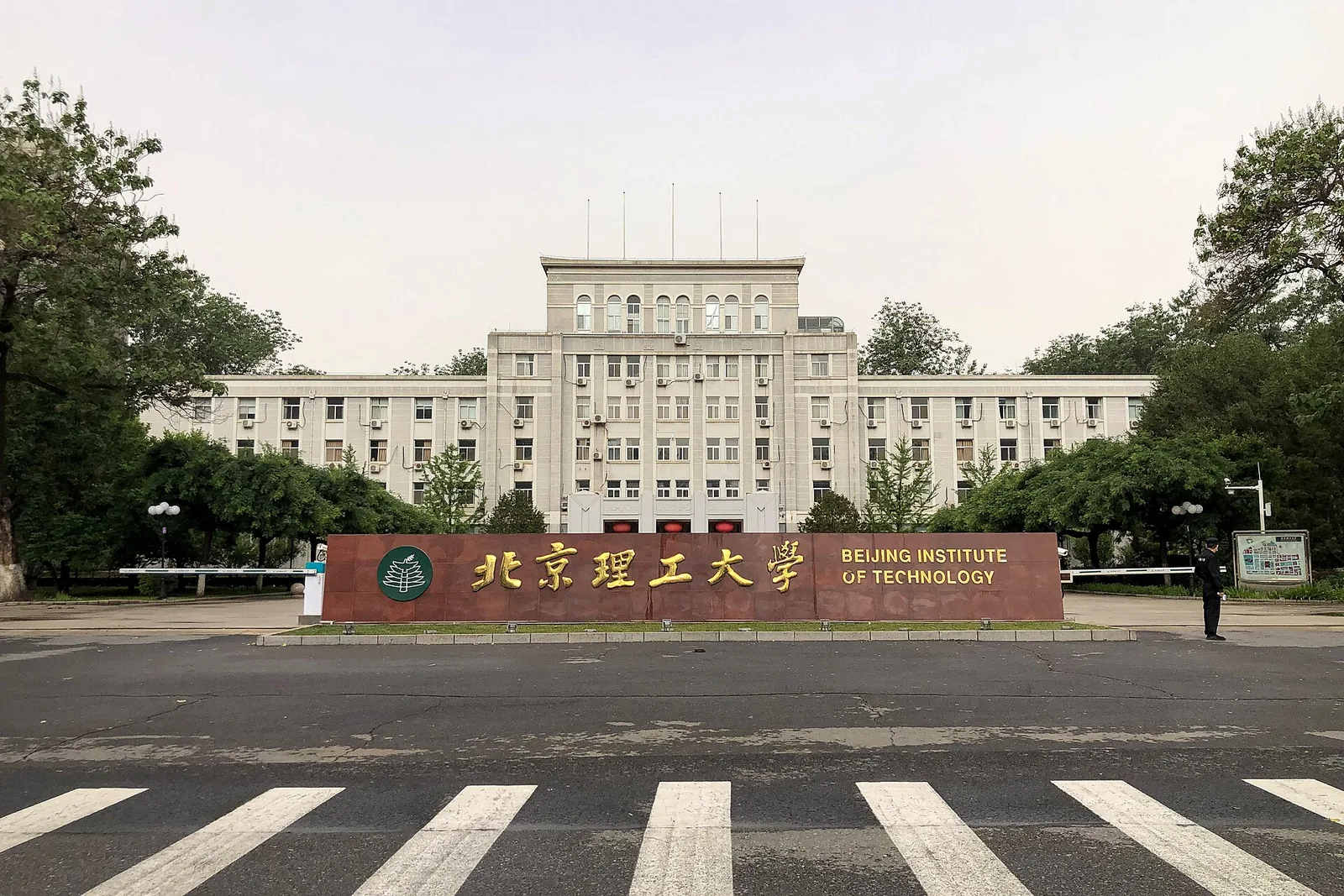
About Beijing Institute of Technology
Beijing Institute of Technology (北京理工大学) was founded in 1940 in Yan’an, Shaanxi province — the university describes itself as the first science and engineering university founded by the Communist Party of China. That origin still shapes the institution: BIT’s deepest strengths are in defence-adjacent engineering, ordnance, explosion science, vehicles, aerospace and automation rather than in the humanities.
BIT is not one campus but four. In Beijing it runs the Zhongguancun campus at No. 5 Zhongguancun South Street in Haidian district, the Liangxiang campus at Nos. 8–9 Liangxiang East Road out in Fangshan district, and the Xishan campus at No. 16 Lengquan East Road in Haidian. A separate campus operates at No. 6 Jinfeng Road, Tangjiawan, Zhuhai, in Guangdong province — roughly two thousand kilometres south, in the Greater Bay Area.
International students are enrolled on both the Beijing and Zhuhai campuses: BIT’s 2026 Chinese Language Program page states that “At present, more than 4,000 international students from 152 countries are studying in BIT Beijing and Zhuhai campuses.” The Office of International Students’ own overview page gives the same totals — “more than 4000 international students from 152 different countries” — without naming the campuses. Note that BIT’s English-language Campuses page lists only the three Beijing campuses; Zhuhai appears on the admissions, accommodation and Chinese Language Program pages instead, so the two official sources differ on how many campuses BIT has. Undergraduate teaching spans schools including Aerospace Engineering, Automation, Computer Science and Technology, Mechatronical Engineering, Information and Electronics, Materials Science and Engineering, Optics and Photonics, Management, Economics, Law and Art and Design.
As stated by BIT in its own 2026 admission books; not independently checked here.
As stated by BIT in its own 2026 admission books.
BIT’s own wording — a band, not a single position.
As stated by BIT in its own 2026 admission books.
China’s first CPC-founded engineering university
Established in Yan’an in 1940 as the country’s first science and engineering university founded by the Communist Party of China.
A four-campus university
Three campuses in Beijing — Zhongguancun and Xishan in Haidian, Liangxiang in Fangshan — plus a full campus in Zhuhai, Guangdong.
Engineering-first
Concentrated in aerospace, mechatronics, automation, vehicles, materials, optics, computing and explosion science rather than spread evenly across all fields.
English-taught engineering degrees
A defined set of English-medium bachelor’s majors, plus English-taught master’s programs, for applicants who arrive without HSK 5.
Admission
Admission, programs & tuition
BIT admits international students to bachelor’s, master’s and doctoral degrees through its Office of International Students, with degree applications submitted at apply.isc.bit.edu.cn — the Chinese Language Program is the exception and applies through a separate Zhuhai portal. Expect an online comprehensive interview: at both levels the published procedure runs registration, application fee after preliminary review, interview, pre-admission, then tuition payment and admission. Undergraduate and graduate admissions are handled by different officers, and the Zhuhai campus runs its own admissions contact and its own scholarship. Decide early which campus your program sits on: it determines who you write to, and for the same room type dormitory rent runs roughly 1.5–1.8 times higher at Zhongguancun than at Liangxiang.
Degree programs
Select a degree level to see tuition, duration and entry requirements.
Bachelor’s degreeUndergraduate
Four-year undergraduate degrees taught in Chinese or in English. English-medium majors on the Beijing campus include Aeronautical and Astronautical Engineering, Automation, Computer Science and Technology, Mechatronics Engineering, Electronics Science and Technology, Mechanical Engineering and International Economics and Trade; the Zhuhai campus offers Artificial Intelligence in English.
- Chinese-taught programs
- CNY 23,000 / year (2026 intake)
- English-taught programs
- CNY 30,000 / year (2026 intake)
Application requirements
- Non-Chinese citizen with a valid foreign passport, in good health.
- Aged 18–25. On applicants under 18 the 2026 undergraduate admission book says only “Applicants under 18 should provide certificate of guardian who has Beijing residency”, and it says it in a single qualification section that also governs the Zhuhai campus program list — so if you are under 18 and applying to Zhuhai, ask study_in_bitzh@bitzh.edu.cn what applies there before assuming a Beijing guardian is required or sufficient. Under-18 applicants must also upload the separate “Application Materials for Student under 18” set from the Resources → Download zone.
- High-school graduation or an equivalent qualification, with certified transcripts and diploma in Chinese or English.
- Chinese-medium programs: HSK Level 5 with a score of 180 or above. One exception is printed beside it: “The majors taught in both Chinese and Russian at the Zhuhai campus only provide HSK Level 5 scores and do not require Russian language scores.”
- English-medium programs: IELTS 6.0+, TOEFL 85+, Duolingo 110+ or another BIT-recognised certificate; “English native speakers are exempted”.
- A China Scholastic Competency Assessment (CSCA) transcript and a personal statement, both marked required; the physical-examination record is listed for undergraduates without that mark. The required CSCA subjects depend on the major: Mathematics + Physics for the engineering majors and for Zhuhai’s Artificial Intelligence, Mathematics alone for International Economics and Trade. If your transcript has not arrived, the page accepts proof of exam registration, but the transcript must be uploaded before the comprehensive interview.
- Art and design applicants additionally submit a portfolio.
Master’s degreeGraduate
Master’s degrees across engineering, science, management and economics, taught in Chinese or English, alongside professional programs including the MBA and Master of Engineering Management. The 2026 graduate admission book gives the standard length once, for all master’s programs: “Duration of Study: 2 years for master’s programs”. It does not say whether the MBA and other professional programs differ, so confirm the length of yours with master_phd@bit.edu.cn.
- Chinese-taught master’s
- CNY 32,000 / year (2026 intake)
- English-taught master’s
- CNY 36,000 / year (2026 intake)
- MBA
- CNY 49,000 / year (2026 intake)
Application requirements
- Non-Chinese citizen in good physical and mental health, under 35 years of age.
- A bachelor’s degree, with a certified diploma and full academic transcripts.
- Chinese-taught programs: HSK Level 5 with a score of 180 or above.
- English-taught programs: TOEFL 85+, IELTS 6.0+ or Duolingo 110+, or “other language certificates recognized by BIT”; the same sentence adds “(native English speakers are exempt)”.
- CV, personal statement, two recommendation letters and a supervisor form.
- Medical examination record and proof of language proficiency.
- MBA applicants need at least one year of related work experience.
Doctoral degreeGraduate
Doctoral study concentrated in BIT’s engineering and science disciplines, supervised within a host school, with the 2026 graduate admission book giving “4 years for Ph.D. programs”. Doctoral applicants go through the same Office of International Students channel and the same two CSC scholarship rounds as master’s applicants.
- Doctoral programs
- CNY 44,400 / year (2026 intake)
Application requirements
- Non-Chinese citizen in good physical and mental health, under 40 years of age.
- A master’s degree, with a certified diploma and full academic transcripts.
- Chinese-taught programs: HSK Level 5 with a score of 180 or above; English-taught programs: TOEFL 85+, IELTS 6.0+ or Duolingo 110+, or another BIT-recognised certificate — “(native English speakers are exempt)”.
- CV, personal statement and a research direction, plus two recommendation letters.
- A supervisor form — identifying and contacting a prospective supervisor is part of the application.
- Medical examination record and proof of language proficiency.
Non-degree programs
Exchange students
For students nominated by partner institutions. Home universities nominate by 15 May for the autumn semester or 15 November for spring; students then apply 1 March – 1 June (autumn) or 15 October – 1 December (spring). Undergraduates must have completed at least two semesters at home; graduate students need not. The application includes a purpose statement of at least 1,000 words and a self-introduction video (MP4, no larger than 50MB). Two exchange-specific rules that do not appear in the degree requirements: your passport must be valid for at least six months beyond the end of your study at BIT, and language proof is IELTS 6.0 / TOEFL 85 or equivalent for English-taught study — with “No requirement for native speakers” — HSK 5 or above for Chinese-taught study, and no HSK level at all for the Intensive Chinese Language program. Choose “General Visiting Student” in the system for undergraduate-level and Intensive Chinese study, “Senior Visiting Student” for graduate-level. Admitted exchange students cannot defer through the Office of International Students; deferral means renominating through your home institution and submitting a fresh application.
Fee · Application fee RMB 500 (non-refundable)
Chinese Language Program
BIT’s 2026 Chinese Language Program page heads the program “Location of Chinese Language Program: BIT Zhuhai Campus”, and it runs for one semester or one full year. Its theoretical courses are listed as “Comprehensive Chinese, Chinese Speaking, Chinese Listening, etc.”, alongside featured elective courses “Overview of China, HSK Tutorial, Chinese Reinforcement” and practical courses “Traditional Lingnan Cultural Experience, Chinese Competition, Academic Talks”, totalling 28 credits for a semester or 56 for a year. The page labels its two application windows “Spring Semester (One-semester)”, running 15 October 2025 – 9 January 2026, and “Fall Semester (One-year)”, running 15 October 2025 – 15 June 2026. Applicants must be non-Chinese citizens aged 18–35 and senior high school graduates or above — a narrower age band than the 16–35 of the Chinese-language scholarship, and applicants under 18 are directed to a separate Zhuhai under-18 materials set rather than refused. Note two things before you commit money: this program applies through a different portal from the degree programs, applyisc.bitzh.edu.cn rather than apply.isc.bit.edu.cn, and the page warns that “The minimum class size of the program is 15 students. Less than 15 students, the class will be canceled.” Zhuhai dormitory rates of CNY 900 (twin) or CNY 500 (4-person) per person per month, insurance of CNY 800–1,800 per year and a residence permit fee of CNY 400 per year are charged on top. Figures are those listed for the 2026 intake.
Fee · CNY 10,000 / semester or CNY 20,000 / year; application fee CNY 500
Summer & winter programs
Short-term summer and winter schools run by the Office of International Students, listed separately from degree admission.
Fee · By program
Dual degree program
BIT lists a dual degree track under Admissions & Aid, run with partner institutions. Terms follow the individual partnership agreement.
Fee · Per agreement
Documents to prepare
- Both admission books mark some items with an asterisk as required and leave the rest unmarked as supporting documents, and the split is not the same at the two levels — the list below says which is which.
- Required at both levels: photocopy of your passport photo page (and China visa page, if you hold one); certified or notarised diplomas and academic transcripts; proof of language proficiency; personal statement.
- Required, undergraduate only: certified or notarised high-school transcripts and high-school diploma in Chinese or English, and a China Scholastic Competency Assessment (CSCA) transcript.
- Required, graduate only: curriculum vitae; two recommendation letters from professors or associate professors; the Recommendation Form for International Student by BIT Supervisors; the physical-examination record, which at graduate level must carry the blood test report; and the non-criminal record.
- Listed but unmarked for undergraduates — the physical-examination record and the non-criminal record. They are required items on the graduate list and only supporting items on the undergraduate one, so undergraduate applicants should confirm with undergraduate@bit.edu.cn rather than assume they can be skipped.
- Listed but unmarked at both levels: the financial guarantee letter (a bank savings certificate) and the scholarship application form, the latter needed only if you are applying for a scholarship.
- Under-18 undergraduate applicants: the separate “Application Materials for Student under 18” set from the Resources → Download zone.
- Art portfolio for design majors — no fewer than two works, listed under “other documents”.
Application timeline
These are the dates Beijing Institute of Technology published for the 2026 intake. That cycle has closed. Use them as a guide to when each step falls in the year, and check the official pages for the 2027 dates before you plan around them.
- 1
Graduate application window
15 Oct 2025 – 1 Jun or 15 Jun 2026Master’s and doctoral applications are submitted at apply.isc.bit.edu.cn. Two official pages give different closing dates: BIT’s 2026 graduate FAQ gives a general application period of 15 October 2025 – 1 June 2026, while BIT’s 2026 graduate scholarships page gives 15 October 2025 – 15 June 2026 for self-funded applicants. Work to the earlier date, 1 June 2026, and confirm with the Office of International Students.
- 2
CSC scholarship — round 1 (graduate)
15 Oct 2025 – 15 Feb 2026First round for the Chinese Government Scholarship university program (Type B). Both pages that describe this scholarship are graduate pages, and it is not listed in the 2026 undergraduate admission book — see the undergraduate CSC entry below instead.
- 3
CSC scholarship — round 2 (graduate)
16 Feb – 15 Apr 2026Second and final round for the Chinese Government Scholarship university program (Type B).
- 4
CSC scholarship (undergraduate) — applied for outside BIT
Usually Nov – AprThe undergraduate admission book routes undergraduates to a different scholarship entirely: “Chinese Government Scholarship (only for Chinese-taught program)”, applied for at the Chinese Embassy or Consulate in your home country, choosing Type A and naming BIT as first-priority institution. It gives the window as “usually from November to April next year” and tells applicants to confirm the dates with the embassy. English-taught undergraduate applicants are not eligible for it.
- 5
University, municipal and provincial scholarship deadline
By 1 May 2026The BIT International Student Scholarship, the Beijing Government Scholarship and the Guangdong Government Outstanding International Student Scholarship all close on 1 May 2026. This date applies at both levels: all three appear with the same deadline in the 2026 undergraduate admission book and on the 2026 graduate pages. Their coverage, however, is not the same at both levels — see the scholarships section.
- 6
Undergraduate application deadline
By 1 Jun 2026The 2026 undergraduate application closes on 1 June 2026.
Tuition is charged per academic year and is set by language of instruction rather than by faculty — English-taught programs cost roughly CNY 7,000 more per year than their Chinese-taught equivalents at undergraduate level. Budget separately for the CNY 600 application fee (CNY 500 for exchange students and for the Chinese Language Program), medical insurance listed at CNY 800–1,800 per year — the exchange and Chinese Language Program pages break the same cover down as CNY 400–900 per half year — a further CNY 400 per year for immigration paperwork, which the undergraduate page calls a visa fee and the graduate pages call a residence permit fee, and accommodation. Figures above are those published for the 2026 intake; confirm the current numbers on the official program page before you commit.
Funding
Scholarships
BIT is an authorised host for the Chinese Government Scholarship and adds municipal, provincial and university awards on top. Read the level label on each award below before you plan around it: BIT publishes separate scholarship sections in its 2026 undergraduate and graduate admission books, and they do not offer the same things. Undergraduates are not offered the CSC university program at all — the undergraduate book sends them to their home-country embassy for the bilateral Type A award, and only for Chinese-taught programs. The Guangdong provincial award is listed at a different amount in each book. The BIT International Student Scholarship and the Beijing Government Scholarship are open at both levels, so their entries below give both. Three further things are worth planning around: the CSC rounds close months before the general application deadline, the Beijing Government Scholarship is Beijing-campus only while the Guangdong award is Zhuhai-campus only, and the International Chinese Language Teachers Scholarship is described in two mutually contradictory ways on BIT’s own pages.
Chinese Government Scholarship — University Program (Type B) — graduate only
Tuition fees, a free university dormitory or an accommodation subsidy, a monthly stipend of CNY 3,000 for master’s and CNY 3,500 for doctoral students, and comprehensive medical insurance at CNY 800 per person per year. The graduate pages note it includes the High Level Graduate Program and the Silk Road Program.
Eligibility: Graduate applicants only. Both pages carrying this award are graduate pages, and it does not appear in the 2026 undergraduate admission book — undergraduates are directed to the Type A bilateral route below instead. Non-Chinese citizens, academically excellent, under 35 (master’s) or 40 (doctoral), meeting the HSK 5 (180+) or equivalent English requirement. Apply in both places: register at studyinchina.csc.edu.cn (BIT’s Agency No. is 10007, Type B) and at apply.isc.bit.edu.cn. Two rounds: 15 October 2025 – 15 February 2026, then 16 February – 15 April 2026.
BIT International Student Scholarship — undergraduate and graduate
Two ladders, and the prize contents are identical in the undergraduate and graduate admission books. Full-length award: first prize covers tuition, university accommodation, a stipend and comprehensive insurance; second prize covers tuition and university accommodation; third prize covers tuition. One-year award: first prize covers tuition and university accommodation; second prize covers tuition; third prize 50% of tuition; fourth prize 25%. Only the full-length duration differs by level — the undergraduate book gives “Four year”, the graduate pages give “Basic Study Duration (Master: 2-year; Ph.D.: 4-year)”.
Eligibility: Open at both levels: the same ladder is printed in the 2026 undergraduate admission book and on the 2026 graduate scholarships page. Awarded on academic performance. Full-length recipients must pass an annual review to keep the award for the following academic year. Applications close 1 May 2026.
Beijing Government Scholarship — undergraduate and graduate, Beijing campus only
Three categories, and note that the ladder is not a simple descending one — insurance is retained at every level while accommodation and stipend drop away. Category A: tuition, university accommodation, stipend and comprehensive insurance. Category B: tuition, university accommodation and comprehensive insurance, but no stipend. Category C: tuition and comprehensive insurance only. The undergraduate and graduate tables agree on all three.
Eligibility: International degree students on the Beijing campus only — Zhuhai students are not eligible. Listed in both the 2026 undergraduate admission book and the 2026 graduate pages, with no level restriction stated in either. Applications close 1 May 2026, and BIT refers applicants to english.beijing.gov.cn for the details.
Chinese Government Scholarship — Bilateral Program (Type A)
Set by the bilateral agreement between China and your home country rather than by BIT.
Eligibility: Applied for through the dispatching authority or the Chinese Embassy or Consulate in your home country, not through BIT; when filling in the form, choose Type A and name BIT as your first-priority institution. For undergraduates this is the only Chinese Government Scholarship BIT lists, and the undergraduate admission book restricts it — “Chinese Government Scholarship (only for Chinese-taught program)” — so an English-taught undergraduate applicant cannot use it. The undergraduate page gives the window as “usually from November to April next year”; otherwise deadlines follow the bilateral agreement, and BIT tells applicants to ask their embassy.
Guangdong Government Outstanding International Student Scholarship — Zhuhai campus only
BIT’s two 2026 admission books give different amounts, and neither is a superset of the other. The undergraduate admission book states a single figure: “Scholarship funding standard: CNY10,000/year”. The graduate pages instead state “Master student: CNY 20,000/person” and “Ph.D. student: CNY 30,000/person”, without saying whether that is per year or once. Do not budget on the CNY 20,000/30,000 figures unless you are a graduate applicant, and confirm the basis of the payment before you rely on it.
Eligibility: International students enrolled on the Zhuhai campus only. Listed at both levels — in the 2026 undergraduate admission book and on the 2026 graduate pages — with the amounts above. Applications close 1 May 2026.
International Chinese Language Teachers Scholarship
Tuition, accommodation at BIT’s Beijing campuses, medical insurance and a living allowance of CNY 2,500 per month, as listed for the 2026 intake.
Eligibility: Non-Chinese citizens aged 16–35 on 1 September 2026, extendable to 45 for in-service Chinese teachers, applying for Chinese language study. The one-year award starts each September, runs 11 months and requires HSK (Level 3) 270 or above plus HSKK (Beginning Level) 60 or above; the one-semester award starts in September or March, runs 5 months and requires HSK (Level 3) 180 or above plus an HSKK score. Two official pages disagree on who may apply: BIT’s 2026 Chinese Language Program & International Chinese Language Teachers Scholarship page sets out the Chinese-language terms above, while BIT’s 2026 graduate scholarships page and its 2026 graduate FAQ both state that only the Master’s degree program in International Chinese Language Education is supported. Ask the Office of International Students which applies before you apply. On the application windows, treat the page with caution rather than as a deadline you can rely on: it gives “March 1st -May 15th (for programs commencing in September 2026)” and “March 1st-October 31st (for programs commencing in March 2026)” — the second window as printed would close more than seven months after the March 2026 program it names had already begun, so the year or the dates in it are wrong. The page itself defers on this point: “For specific deadline, please refer to the Application Information issued by Center for Language Education and Cooperation every year.” Applications go through cis.chinese.cn (choosing Beijing Institute of Technology) and must be completed at apply.isc.bit.edu.cn as well; confirm the real closing date with studychinese@bit.edu.cn before planning around either window.
Research
Research at the university
BIT’s research identity is built around engineering that has to survive contact with the physical world — explosion and blast science, vehicles, robotics, flame-retardant materials and large-scale data systems. Its national platforms are concentrated in those areas rather than spread thinly.
State Key Laboratory of Explosion Science and Technology
BIT’s flagship national laboratory, and the clearest expression of the university’s ordnance and blast-engineering heritage.
National engineering platforms
The National Engineering Research Center of Flame Retardant Materials, the National Engineering Laboratory for Electric Vehicles and the National Engineering Laboratory for Big Data System Software.
Intelligent control & complex systems
The Key Laboratory of Complex System Intelligent Control and Decision, a Ministry of Education laboratory underpinning BIT’s automation and control research.
Biomimetic robotics
The International Joint Research Laboratory of Biomimetic Robots and Systems, a Ministry of Education joint laboratory.
- A photodiode integrating sensing and computing in visual devices, by Shen Guozhen and Wang Zhuoran, published in Nature Electronics.
- Implantable micro-supercapacitors developed for small-intestine wound healing by Professor Zhao Yang’s team.
- Research on how global carbon-neutrality policies affect agriculture, led by Professor Wei Yiming.
- Large language model optimisation work accepted to ACL 2026, which BIT’s listing says “is scheduled to take place from July 2 to July 7 in San Diego, California, the United States”; the listing does not name the researchers.
Global engagement
Global engagement
BIT runs a two-way exchange program with partner institutions and a dual degree track, and its Zhuhai campus in the Guangdong–Hong Kong–Macao Greater Bay Area gives the university a second international front door well away from Beijing.
Exchange & study abroad
Incoming exchange places for students nominated by partner institutions, on a fixed nomination-then-application calendar for the autumn and spring semesters.
Dual degree program
A dual degree track listed under Admissions & Aid, run with partner universities under individual agreements.
Zhuhai campus
A full campus in Tangjiawan, Zhuhai, in the Greater Bay Area, with its own international admissions contact, its own English-taught Artificial Intelligence degree and its own Guangdong provincial scholarship.
Chinese language pathway
A Chinese Language Program listed under Admissions & Aid, paired with the International Chinese Language Teachers Scholarship. BIT’s single 2026 page for the two puts them on different campuses in its own section headings — “Location of Chinese Language Program: BIT Zhuhai Campus” and “Location of International Chinese Language Teachers Scholarship Program: BIT Beijing Campus” — and states plainly that “ALL scholarship applicants will study at the Beijing campus.” A scholarship-funded place is therefore a Beijing place, not a Zhuhai one.
Career
Career & alumni
BIT does not publish a detailed English-language careers guide for international students, and its Campus Life and Alumni sections describe no careers service, internship scheme or placement support. What the Alumni section does carry is alumni organisations, alumni events and alumni stories, indexed by country of origin. Ask your host school directly about placement and internship support before you enrol.
Career support
- Alumni organisations, alumni events and alumni stories for international students, indexed by country, run through the Office of International Students.
- No central careers or internship service for international students is described on BIT’s English-language pages — raise the question with your prospective school before you accept an offer.
- Graduate applicants identify a supervisor as part of the application, which shapes research and industry connections from the start.
Notable alumni
Campus life
Campus life
Where you live at BIT is decided by which campus your program runs on, and the difference is large. Zhongguancun in Haidian puts you inside Beijing’s university and technology belt; Liangxiang is a purpose-built campus out in Fangshan district in the far south-west of the city, quieter and considerably cheaper; Zhuhai is a subtropical coastal campus in Guangdong. Dormitory rent ranges from CNY 500 to CNY 1,350 a month depending on which of those you land on and how many people share the room.
Accommodation
Zhongguancun campus dormitory
CNY 1,350 / 1,200 / 900 per person per month respectively
At No. 5 Zhongguancun South Street, Haidian district — the historic city campus, and the most expensive of the three. Floor kitchens and public laundry. Billed by the semester as a minimum. Dormitory reception: +86-10-68918189.
Liangxiang campus dormitory — Building 1
CNY 900 / 700 / 500 per person per month respectively
On campus in Fangshan district. Building 1 rooms have private in-room kitchens — the only BIT dormitory listed with them — plus public laundry. Billed by the semester as a minimum.
Liangxiang campus dormitory — Building 2
CNY 900 and CNY 500 per person per month respectively
Listed as off-campus. Only 2- and 4-person rooms — the accommodation page lists no 3-person option here, and gives no kitchen or laundry detail for this building. Billed by the semester as a minimum.
Zhuhai campus dormitory
CNY 900 and CNY 500 per person per month respectively
At No. 6 Jinfeng Road, Tangjiawan Town, Zhuhai 519000. Only 2- and 4-person rooms are listed. Utilities are billed separately here, and rent is paid on registration day rather than by the semester.
Dining
BIT does not publish an English-language guide to its canteens for international students. The Campus Life section of isc.bit.edu.cn covers regulations, visa, insurance, the academic calendar, a handbook, accommodation and campus maps — but nothing on dining. Ask the Office of International Students directly if catering matters to your decision.
Facilities
Room standard
An air conditioner, desk, wardrobe, refrigerator and internet access, plus a bathroom with 24-hour hot water. The accommodation page lists this standard only under the Zhongguancun and Liangxiang Building 1 dormitories; it prints no facilities list at all for Liangxiang Building 2 or for Zhuhai, where the “Facilities” heading is followed by nothing. Do not assume the same fit-out at those two — ask before you accept a room.
Kitchens & laundry
Liangxiang Building 1 lists private in-room kitchens; Zhongguancun lists floor kitchens. Both list public laundry. The accommodation page gives no kitchen or laundry detail for Liangxiang Building 2 or Zhuhai.
Insurance & visa
Medical insurance is compulsory and is listed at CNY 800–1,800 per year; the undergraduate page separately lists a visa fee of CNY 400 per year.
Student handbook
The Campus Life section on isc.bit.edu.cn carries a handbook, an academic calendar, regulations and rules, visa and insurance pages, and maps for living on campus and in Beijing.
FAQ
Frequently asked questions
How much is tuition at Beijing Institute of Technology for international students?+
For the 2026 intake, undergraduate tuition is CNY 23,000 per year for Chinese-taught programs and CNY 30,000 per year for English-taught programs. Master’s programs are CNY 32,000 per year in Chinese and CNY 36,000 in English, the MBA is CNY 49,000 per year, and doctoral programs are CNY 44,400 per year. The non-degree Chinese Language Program is priced separately at CNY 10,000 per semester or CNY 20,000 per year. The application fee is CNY 600 for degree programs but CNY 500 for exchange students and for the Chinese Language Program. Insurance at CNY 800–1,800 a year, CNY 400 a year for immigration paperwork and dormitory rent are all charged on top.
What are the admission requirements for international students at BIT?+
You must be a non-Chinese citizen with a valid passport and in good health. Chinese-taught programs require HSK Level 5 with a score of 180 or above; English-taught programs require IELTS 6.0, TOEFL 85 or Duolingo 110, or another certificate BIT recognises — but every one of BIT’s 2026 admission books states that native English speakers are exempt from this test requirement, so do not book a sitting before checking whether that covers you. Undergraduate applicants must be 18–25, hold a high-school diploma and submit a CSCA transcript; applicants under 18 are not refused outright but must supply extra guardianship documents, worded on the undergraduate page as a certificate of a guardian with Beijing residency. Master’s applicants must be under 35 and hold a bachelor’s degree; doctoral applicants must be under 40 and hold a master’s degree, with two recommendation letters and a supervisor form.
When is the application deadline for Beijing Institute of Technology?+
The 2026 undergraduate deadline is 1 June 2026. Graduate applications open on 15 October 2025, but the two official pages disagree on when they close: BIT’s 2026 graduate FAQ says 1 June 2026, while its 2026 graduate scholarships page says 15 June 2026 for self-funded applicants. Treat 1 June 2026 as your deadline and confirm with the Office of International Students. Scholarship deadlines are earlier: the two CSC rounds — closing 15 February 2026 and 15 April 2026 — are the graduate university-program rounds, while undergraduates apply for the bilateral CSC through their home-country embassy on that embassy’s own timetable, usually November to April. The BIT, Beijing and Guangdong scholarships close on 1 May 2026 at both levels.
Does BIT offer scholarships for international students?+
Yes, but what is on offer depends on your level, and the headline figures belong to the graduate awards. The Chinese Government Scholarship university program — tuition, accommodation, insurance and a stipend of CNY 3,000 a month for master’s and CNY 3,500 for doctoral students — is a graduate award; it is not in BIT’s 2026 undergraduate admission book, which instead routes undergraduates to the bilateral Type A scholarship through their home-country embassy and only for Chinese-taught programs. Open at both levels are the BIT International Student Scholarship, in tiers from full coverage down to 25% of tuition, and the Beijing Government Scholarship, for Beijing-campus students. The Guangdong award, for Zhuhai-campus students, is listed at CNY 10,000 a year in the undergraduate book but at CNY 20,000 for master’s and CNY 30,000 for doctoral students on the graduate pages. Undergraduate applicants should confirm the terms with undergraduate@bit.edu.cn for Beijing or study_in_bitzh@bitzh.edu.cn for Zhuhai before counting on any of these figures.
Which campus will I actually study on?+
BIT has three campuses in Beijing — Zhongguancun and Xishan in Haidian district, Liangxiang in Fangshan district — plus a campus in Zhuhai, Guangdong. International students are enrolled on the Beijing and Zhuhai campuses. It matters practically: dormitory rent runs CNY 900–1,350 a month at Zhongguancun but only CNY 500–900 at Liangxiang, and Zhuhai has a separate admissions office and scholarship. Confirm your campus before you book anything.
Can I study at BIT in English?+
Yes. English-taught bachelor’s majors on the Beijing campus include Aeronautical and Astronautical Engineering, Automation, Computer Science and Technology, Mechatronics Engineering, Electronics Science and Technology, Mechanical Engineering and International Economics and Trade; the Zhuhai campus offers Artificial Intelligence in English. English-taught master’s programs are also available, at CNY 36,000 per year. Two costs come with choosing English: the undergraduate English-taught fee is CNY 30,000 a year against CNY 23,000 for Chinese-taught, and the one Chinese Government Scholarship BIT offers undergraduates — the bilateral Type A award applied for through your home-country embassy — is restricted in the undergraduate admission book to Chinese-taught programs, so it is not open to you if you study in English.
How much does accommodation cost at BIT?+
On the Zhongguancun campus, dormitory rooms cost CNY 1,350 per person per month for a 2-person room, CNY 1,200 for 3-person and CNY 900 for 4-person. Liangxiang Building 1 lists CNY 900 / 700 / 500 for 2-, 3- and 4-person rooms. Liangxiang Building 2 and the Zhuhai dormitory list only 2-person rooms at CNY 900 and 4-person rooms at CNY 500 — no 3-person option. Air conditioning, a desk, wardrobe, refrigerator, internet and a bathroom with 24-hour hot water are listed for Zhongguancun and Liangxiang Building 1; the accommodation page gives no facilities list for Liangxiang Building 2 or Zhuhai, so do not assume the same standard there. The Beijing dormitories bill by the semester as a minimum; at Zhuhai rent is paid on registration day with water and electricity billed separately on top. These are the rates listed for the 2026 intake.
Contact
Contact the admissions offices
Reach the Office of International Students, Beijing Institute of Technology for questions about applications, documents, scholarships and arrival. Type university programs and offices are based on campus in Beijing.
- Office
- Office of International Students, Beijing Institute of Technology
- Address
- 5 Zhongguancun South Street, Haidian District, Beijing 100081, P.R. China
- Undergraduate admissions, Beijing campus (Ms SHEN): undergraduate@bit.edu.cnMaster’s and doctoral admissions (Ms CHEN): master_phd@bit.edu.cn — the 2026 graduate admission book gives this as the only graduate contact and lists it at the Beijing Zhongguancun address. It publishes no separate Zhuhai graduate office, and the Zhuhai contact below is given only for undergraduate admissions and the Chinese Language Program, so Zhuhai graduate applicants should write here and ask to be redirected.Incoming exchange students: incoming_exchange@bit.edu.cnOffice of International Students, BIT Zhuhai — undergraduate admissions and the Chinese Language Program (Ms ZHANG, Ms TU): study_in_bitzh@bitzh.edu.cnInternational Chinese Language Teachers Scholarship: studychinese@bit.edu.cn
- Phone
- Undergraduate admissions, Beijing campus: +86-10-68918272Graduate admissions and incoming exchange: +86-10-68910992Zhongguancun dormitory reception: +86-10-68918189Office of International Students, BIT Zhuhai — undergraduate admissions and the Chinese Language Program: +86-756-3835166 / +86-756-3835204International Chinese Language Teachers Scholarship: +86-10-68912161Office of International Students fax: +86-10-68914846
Verified from official sources · last checked 2026-08-16
Tuition, fees and deadlines change every intake. Always confirm the current figures on the official Beijing Institute of Technology pages before applying.
- How to apply for 2026 BIT Undergraduate Program
- How to apply for 2026 BIT Graduate Program
- 2026 International Students Graduate Programs — scholarships
- Accommodation
- International Exchange Students
- Admissions & Aid
- Undergraduate programs
- Postgraduate programs
- Our Story
- Campuses
- Labs & Centers
- Research Highlights
- About the Office of International Students of BIT
- How to apply for 2026 Chinese Language Program & International Chinese Language Teachers Scholarship Program
- Campus Life
- Alumni