
About
About Beihang University
Beihang University (北京航空航天大学), still widely known by its old abbreviation BUAA, was founded on 25 October 1952 as the Beijing Institute of Aeronautics — the first higher-education institution in aeronautics and astronautics established after the founding of the People’s Republic of China. It was formed by merging the aeronautics departments of the Beijing Institute of Technology, Tsinghua University and Sichuan University. It became Beijing University of Aeronautics and Astronautics in April 1988 and adopted the English name Beihang University in 2002.
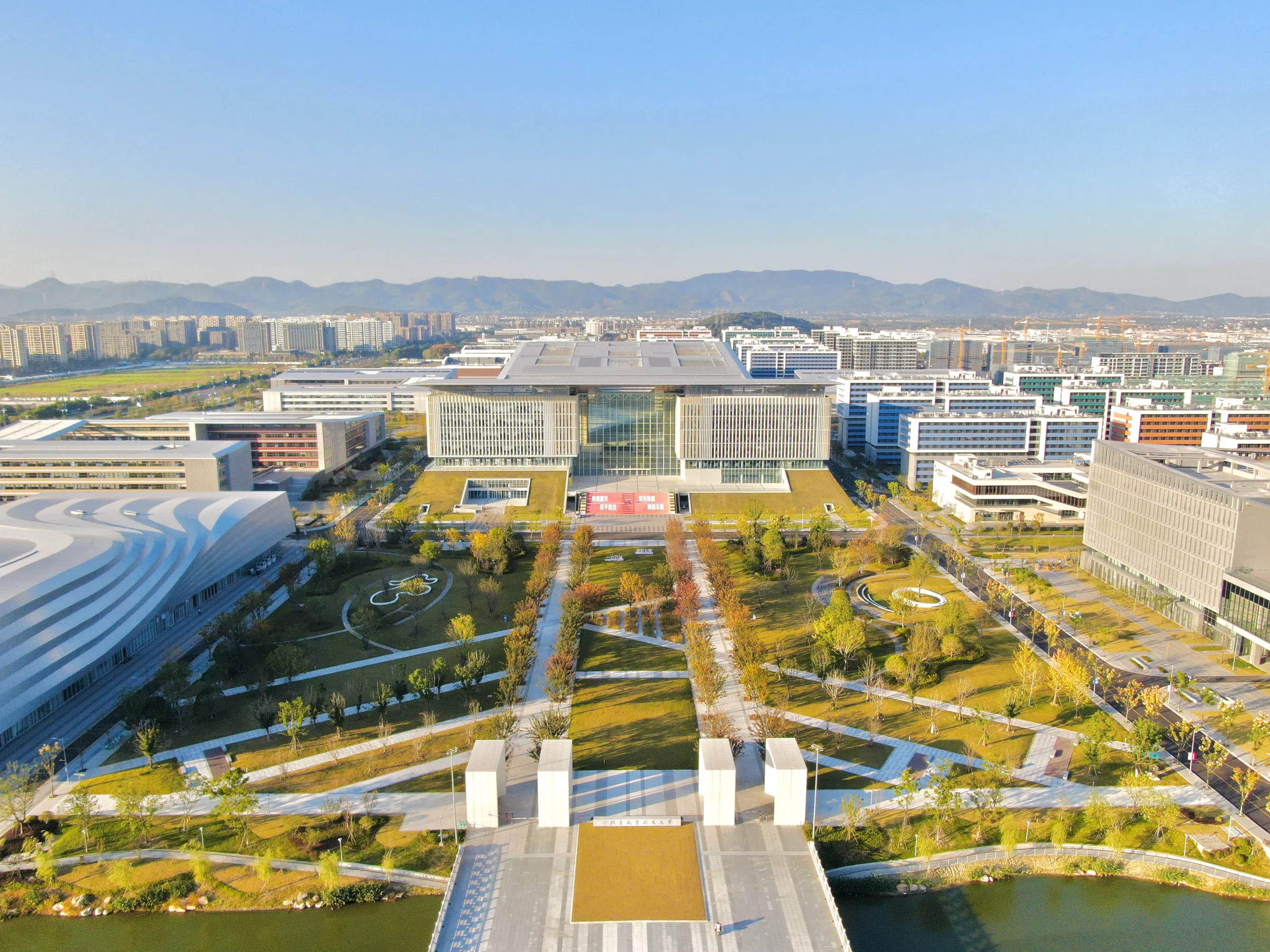
Beihang is not a single-site university, and this matters more here than at most Beijing institutions. There are three campuses: Xueyuan Road (98.4 hectares) in Haidian District, Beijing; Shahe (97.2 hectares) in Changping District, Beijing; and the Hangzhou International Campus (66.73 hectares) in Yuhang District, Hangzhou, Zhejiang Province — a different city entirely. Which one you land on depends on your school and program, and it changes your rent and your commute.
The university spans ten disciplinary categories — engineering, science, management, liberal arts, law, economics, philosophy, education, medicine and interdisciplinary studies — with eight disciplines in the national Double First-Class initiative, which Beihang was selected for in 2017, and 37 first-level disciplines. It enrols over 43,000 students (16,796 undergraduates, 24,168 graduate students and 2,237 international students as counted on Beihang at a Glance, updated June 2026) and employs 6,305 faculty and staff. Two official pages disagree on academicians: the university’s Introducing Beihang page states 30 members of the Chinese Academy of Sciences and the Chinese Academy of Engineering, while the International School’s "10 Reasons" page states 37 and marks its data as updated in October 2024. Both are cited below; neither page states which count supersedes the other.
Disciplines in the national "Double First-Class" Initiative, per Beihang at a Glance (updated June 2026)
Beihang at a Glance, updated June 2026
China’s first university dedicated to the field, founded 1952
China’s first aerospace university
Founded in 1952 as the Beijing Institute of Aeronautics, the first institution of higher education in aeronautics and astronautics in the People’s Republic of China.
Three campuses, two cities
Xueyuan Road and Shahe in Beijing, plus the Hangzhou International Campus in Zhejiang — international students study on all three, depending on program.
Teaching in five languages
The master’s and doctoral major lists carry a five-way key, marking each program as taught in Chinese, English, French, German or Russian. Check the key against your specific major before applying — the language is set per program, not per school.
Engineering-first curriculum
Strongest in aerospace, instrumentation, materials, software and control; the English-taught undergraduate list is almost entirely engineering.
Admission
Admission, programs & tuition
Beihang admits international students to bachelor’s, master’s and doctoral degrees, to a Foundation + Bachelor pathway, and to non-degree programs. One thing sets its undergraduate admission apart from most Chinese universities: applicants on the standard undergraduate route must sit the China Scholastic Competency Assessment (CSCA), a standardized test run by the China Scholarship Council under the Ministry of Education, and upload the transcript before the CSCA deadline. That requirement is undergraduate-only and, within undergraduate entry, route-specific — the master’s and doctoral pages never mention the CSCA, and on the Foundation + Bachelor pathway it is a condition of progressing into the degree rather than of applying. All applications go through the Beihang system at admission.buaa.edu.cn. Note that undergraduate admission is age-bounded — the 2026 Undergraduate page requires applicants to be "between the ages of 18 and 22" — while master’s applicants must be under 35 and doctoral applicants under 40. The undergraduate age floor is not an absolute bar, however: the same page’s document list states that "Applicants under the age of 18 as of Sept 1, 2026 should submit a notarized Guardian Guarantee Letter", so a 17-year-old applying for the September intake applies through that route rather than being excluded.
Degree programs
Select a degree level to see tuition, duration and entry requirements.
Bachelor’s degreeUndergraduate
Four-year undergraduate degrees in Chinese or in English. The 2026 English-taught list runs to eleven majors and is engineering-heavy: communication engineering, flight vehicle design and engineering, low-altitude technology and engineering, computer science and technology, mechanical engineering, robotics engineering, safety engineering, quality and reliability engineering, artificial intelligence, biomedical engineering and international economics and trade. Chinese and English are not the only two options on the page: the Chinese-taught major list also carries eight majors marked "(Taught in French)" — four at l’École Centrale de Pékin and four at the Zhongfa Aviation Institute — which the page groups under the Chinese-taught list without setting a separate tuition rate, and without stating which language requirement applies to them.
- Chinese-taught: science, engineering, management, literature, law
- RMB 25,000 / year
- Biomedical engineering, visual communication design, painting
- RMB 30,000 / year
- Programs taught in English
- RMB 30,000 / year
Application requirements
- Non-Chinese citizen with a valid passport, meeting the Nationality Law of the PRC and Ministry of Education Document No. 12 (2020).
- Aged between 18 and 22, in good physical and mental health, with a senior high-school diploma — the age floor is not an absolute bar, and applicants under 18 apply through the Guardian Guarantee Letter route set out below instead of being excluded.
- China Scholastic Competency Assessment (CSCA) transcript, submitted to the Beihang system by 30 May 2026.
- Chinese-taught programs: HSK Level 5 or above with a score of at least 180, taken within the last two years. Unlike the Master Program and Doctoral Program pages, the 2026 Undergraduate page prints no exemption from this — there is no undergraduate waiver for applicants whose previous education was in Chinese.
- English-taught programs: applicants whose native language is not English submit an English proficiency certificate obtained within two years — TOEFL 90 or above, IELTS 6.0 or above, proof issued by the high school that all courses were taught in English, or another English proficiency certificate.
- Foreigner Physical Examination Form and blood report (valid 6 months), non-criminal record certificate, birth certificate and documents proving both parents’ nationality at the time of your birth.
- Financial guarantor letter plus proof — a bank deposit covering four years of tuition, or annual income of at least RMB 30,000.
- Applicants under the age of 18 as of 1 September 2026 are not excluded, but must submit a notarized Guardian Guarantee Letter; the guardian must be an adult who resides in the city where the campus is located (Beijing or Hangzhou) with a source of income.
Master’s degreeGraduate
Two- to three-year master’s degrees across the full disciplinary range, including programs on the Hangzhou International Campus. Individual programs are taught in Chinese, English, French, German or Russian — the major list marks each one.
- All master’s programs
- RMB 35,000 / year
Application requirements
- Non-Chinese citizen in good physical and mental health, holding a bachelor’s degree, under the age of 35.
- Chinese-taught programs: HSK Level 5 or above with at least 180 points, taken within two years — but not for everyone. The Master Program page waives the report outright: "It is not necessary to provide HSK report if your previous educational language is Chinese in a Chinese university."
- English-taught programs: IELTS Academic 6.0, TOEFL 90 or Duolingo 105, taken within two years; GRE scores are recommended in addition if you have them.
- An acceptance letter from a Beihang supervisor — required of all master’s applicants in principle.
- A study plan of at least 1,000 characters and two recommendation letters from professors or associate professors.
- Notarized diploma and transcripts, Foreigner Physical Examination Form, non-criminal record, financial proof, resume and an Integrity Commitment Letter.
Doctoral degreeGraduate
Four-year doctoral study, supervisor-led, across aerospace, engineering, the sciences, management and the social sciences. Securing a supervisor’s acceptance letter is the practical bottleneck — start that conversation well before the deadline.
- All doctoral programs
- RMB 42,000 / year
Application requirements
- Non-Chinese citizen in good physical and mental health, holding a master’s degree, under the age of 40.
- Chinese-taught programs: HSK Level 5 or above with at least 180 points, taken within two years — but not for everyone. The Doctoral Program page waives the report outright, in the same words as the master’s page: "It is not necessary to provide HSK report if your previous educational language is Chinese in a Chinese university."
- English-taught programs: IELTS Academic 6.0, TOEFL 90 or Duolingo 105, taken within two years; GRE scores are recommended in addition if you have them.
- An acceptance letter from a prospective doctoral supervisor.
- A study plan of at least 1,000 characters and two recommendation letters.
- Notarized diploma and transcripts, Foreigner Physical Examination Form, non-criminal record, financial guarantor documents, resume and an Integrity Commitment Letter.
Non-degree programs
Foundation + Bachelor Program
A short spring foundation course leading into a bachelor’s start in August or September 2026 in Computer Science and Technology (AI and Big Data), International Economics and Trade (Digital Trade) or Biomedical Engineering. The Foundation + Bachelor page sets five progression conditions: obeying Beihang and Chinese rules and regulations, taking the China Scholastic Competency Assessment (CSCA) organised by the China Scholarship Council and obtaining scores, passing every foundation-course exam, 95% or above attendance, and passing an interview and examination arranged by Beihang and the Chinese Government. Note that CSCA is a progression condition here, not an entry condition — unlike the standard undergraduate route, the Foundation page does not ask for a CSCA transcript to apply. Eligibility otherwise mirrors the undergraduate route, ages 18 to 22 with a senior high-school diploma and English proficiency only (no HSK), but the guardian cut-off is a different date: the Foundation page requires a notarized Guardian Guarantee Letter from "Applicants under the age of 18 as of April 15th, 2026", not the 1 September 2026 date the undergraduate page uses. The application deadline is earlier than the main undergraduate route: 10 March 2026, with centralised registration on 15 April 2026.
Fee · RMB 8,000 foundation, accommodation included (plus medical RMB 400–500, insurance RMB 400 and visa extension RMB 400) + RMB 30,000 / year bachelor’s
Chinese Language Training Program
Six levels — Elementary A and B, Intermediate A, B and C, and Advanced — with 20 classes a week of 45 minutes each, Monday to Friday. Open to anyone aged 18–55; a group runs with at least five students, and accommodation is quoted at 30 RMB a day for students who sign up in time. The autumn 2026 semester runs 1 September 2026 – 6 January 2027, with the full-year option ending 6 July 2027. Applications close 15 July 2026.
Fee · RMB 9,000 / semester or RMB 17,200 / year, plus RMB 400 registration
General visiting student / scholar
Study or research attached to a host school without enrolling in a degree. Applicants must have completed at least two years of undergraduate study, be under 35 in general, and have a good command of English or Chinese; the file must include a study or research plan of at least 500 words and two recommendation letters from professors or academic experts. Dormitory accommodation is quoted at 30 yuan per day per bed in a double room, utilities excluded. Deadlines: 30 December 2025 for spring entry (registration March 2026), 30 June 2026 for autumn (registration September 2026).
Fee · RMB 13,000 per half year, plus RMB 400 application fee and RMB 400 insurance per half year
Exchange students
For students with a good academic record and adequate English or Chinese, officially nominated by a home university holding a formal exchange agreement. Dormitory is quoted at RMB 900 per month for a double-occupancy bedroom with a shared bathroom; the exchange page states there is no single-room option. Tuition-free does not mean cost-free beyond insurance: Chinese language courses taken alongside your regular studies are free at elementary level, but the page warns that intermediate courses "may incur an extra fee of ¥6000 per semester". Nomination deadlines are 15 April for the autumn semester and 15 October of the previous year for spring; the semester dates the page sets out are for 2024–2025 (autumn registration late August, semester ending in January; spring registration late February, semester ending in June), so confirm your own year’s calendar.
Fee · Tuition paid to your home university; insurance ¥400 per 6 months
Documents to prepare
- Passport information page — the required validity differs by level, so check the page for your own level. Undergraduate: the 2026 Undergraduate page requires the information page of an ordinary passport whose "expiry date should be after March 1, 2027", and applicants already in mainland China must also supply the valid visa or residence permit page; that page adds that the passport cannot be changed between application submission and enrollment. Master’s and doctoral: both the Master Program and Doctoral Program pages ask only for the "Passport home page (ordinary passport with the validation over September, 2026)" — they set no March 2027 date. The Foundation + Bachelor page uses the undergraduate wording, "the expiry date should be after March 1st, 2027".
- High-school graduation certificate (undergraduate) or notarized degree diploma (graduate), plus full transcripts.
- CSCA transcript — for applicants on the standard undergraduate route only. It is not on the Foundation + Bachelor document list, nor on the master’s or doctoral lists.
- Language proficiency evidence — and what counts differs by level, so do not read this row as one universal rule. Chinese-taught programs ask for HSK 5 with 180 points or more, taken within two years, at every level; but the Master Program and Doctoral Program pages then waive the report entirely where "your previous educational language is Chinese in a Chinese university", and the 2026 Undergraduate page prints no such waiver. English-taught undergraduate applicants may use TOEFL 90, IELTS 6.0, a letter from the high school confirming all courses were taught in English, or another English proficiency certificate; English-taught master’s and doctoral applicants use IELTS Academic 6.0, TOEFL 90 or Duolingo 105, with GRE recommended in addition. Duolingo appears only on the postgraduate pages.
- Foreigner Physical Examination Form and blood examination report, valid within 6 months.
- Certificate of non-criminal record, valid within 6 months.
- Financial guarantor letter and financial proof.
- Study plan and two recommendation letters, plus a supervisor acceptance letter — master’s and doctoral applicants only, and the length required differs: the postgraduate pages ask for "more than 1,000 characters or words", while the general visiting student / scholar route asks for a study or research plan of "no less than 500 words" and needs no supervisor acceptance letter. Undergraduate applicants submit neither.
- Integrity Commitment Letter confirming all materials are genuine.
- Documents must be in English or Chinese, or accompanied by a notarized translation.
Application timeline
These are the dates Beihang University published for the 2026 intake. That cycle has closed. Use them as a guide to when each step falls in the year, and check the official pages for the 2027 dates before you plan around them.
- 1
Online application opens
1 Nov 2025The same opening date applies to undergraduate, master’s and doctoral applications at admission.buaa.edu.cn.
- 2
Foundation + Bachelor deadline
By 10 Mar 2026The Foundation pathway closes months before the standard undergraduate route.
- 3
CSCA transcript deadline (undergraduate)
By 30 May 2026Undergraduate scholarship applications — Outstanding Talents, Program and Cooperation, Beijing Government and Self-Supported — also close on this date per the 2026 Undergraduate page. The individual scholarship regulation pages give slightly different dates; see the scholarships section.
- 4
Undergraduate pre-admission batches
Mar / Apr / Jun 2026Three rounds of pre-admission decisions, with official admission issued in July 2026.
- 5
Application deadline
30 Jun 2026Undergraduate, master’s and doctoral applications all close; all materials, including returned items, must be complete. This date covers degree study only — the non-degree routes run on their own calendar.
- 6
Non-degree deadlines
Own calendarChinese Language Training closes 15 July 2026. The general visiting student / scholar route is 30 June 2026 for autumn entry and 30 December 2025 for spring. Exchange nominations are due 15 April for autumn and 15 October of the previous year for spring. Foundation + Bachelor is 10 March 2026.
- 7
Registration & start of the academic year
Aug–Sep 2026Undergraduates register in August or September; postgraduates register in September.
Beihang’s postgraduate tuition is a single flat figure rather than a band — RMB 35,000 per year for master’s and RMB 42,000 per year for doctoral study, as listed for the 2026 intake. Undergraduate tuition is RMB 25,000–30,000 per year depending on major and language of instruction. Budget separately for the RMB 400 application fee (non-refundable whatever the outcome), insurance — RMB 3,200 for four years at undergraduate level or RMB 800 per year for postgraduates — and accommodation. These bands cover degree study only: the non-degree routes are priced separately and sit outside them, at RMB 8,000 for the foundation course, RMB 9,000 a semester or RMB 17,200 a year for Chinese language training, and RMB 13,000 per half year for a general visiting student. Always confirm the current figure on the official program page before applying.
Funding
Scholarships
Beihang runs a layered scholarship system: five Chinese Government Scholarship channels, the International Chinese Language Teachers Scholarship, the Beijing Government Scholarship, and four Beihang-funded awards. The important practical detail is procedural — the university-level awards require a separate application form submitted alongside your admission materials in the same online system. If you do not attach it, you are treated as not having applied. Deadlines are the trap here, because the official pages disagree: the 2026 Undergraduate Program page gives 30 May 2026 for the university and Beijing Government awards, while the standing regulation pages give 31 May for new Self-Supported applicants and 25 May (autumn) or 20 December (spring) for the Program and Cooperation award, "rely on the notification of that year". The Outstanding Talents procedures page adds a third reading, giving "June 20, 2023 (same as the application deadline for the current year)" — which read literally for 2026 would mean the 30 June application deadline, a month later than the Undergraduate page allows. Two more windows appear nowhere on the Undergraduate page at all, because they are for students already here: the Distinguished Foreign Students Scholarship is applied for between 20 September and 20 October, and continuing Self-Supported students apply between 5 and 15 May. Work to the earliest date that applies to you and confirm with the International School.
Chinese Government Scholarship — Bilateral Program (Type A)
Full scholarship or partial scholarship for the four-year undergraduate duration; students must pass the annual scholarship review each academic year.
Eligibility: Applicants who meet Beihang’s admission requirements and apply through the dispatching authorities of their home country. At undergraduate level this channel is only open to Chinese-taught programs.
Chinese Government Scholarship — other channels
Funding terms are set by the China Scholarship Council for each channel; Beihang does not restate them on its scholarship index.
Eligibility: Beihang lists four further CSC channels: the High-level Postgraduates Program at Beihang University, the Youth of Excellence Scheme of China Program, the Belt & Road Program and the China Link Program. Each has its own page on the International School scholarship index.
Beijing Government Foreign Students Scholarship
Full tuition fee plus comprehensive medical insurance, awarded for the applied academic year, as set out in the scholarship table on the 2026 Undergraduate page. The International School’s own page for this scholarship carries no coverage terms — it links only to other Beihang award procedures.
Eligibility: Meeting the International Undergraduate Program requirements, excellent academic performance with proper moral conduct during high school, and outstanding performance in the entrance integrative test. The 2026 Undergraduate page gives a deadline of 30 May 2026.
Outstanding Talents Scholarship of Beihang University (Freshman)
Beihang’s most generous own award. The 2026 Undergraduate page lists full tuition fee, accommodation fee and living allowance; the scholarship’s own procedures page (2023 edition) specifies 100% of tuition for four academic years, a subsidy for campus dormitory accommodation and a monthly living allowance of RMB 2,500. Renewal depends on passing an annual review each academic year.
Eligibility: Fresh high-school graduates meeting the International Undergraduate Program requirements, with excellent academic performance and proper moral conduct, an outstanding result in the entrance integrative test, and at least one recommendation letter from a high-school principal or supervisor. Priority goes to applicants with expertise, honours or patents related to the field of application, or third-level or higher awards in provincial or municipal artistic or sporting competitions.
Distinguished Foreign Students Scholarship
Two tracks, both cash prizes rather than fee waivers. Scholarship of Excellent Study: RMB 5,000 (first prize), RMB 3,000 (second) or RMB 2,000 (third). Scholarship of Outstanding Behavior: RMB 3,000, RMB 2,000 or RMB 1,000. Winners also receive a certificate.
Eligibility: Enrolled students and scholars — undergraduate, master’s and doctoral — generally after one year at Beihang. The Excellent Study track rewards academic diligence; the Outstanding Behavior track rewards achievement in science, sport, the arts, cultural exchange and public benefit activities. Applications run 20 September to 20 October, "rely on the notification of that year", so it sits outside the admission cycle entirely — this is an award for continuing students, not an entry scholarship. Where candidates are otherwise equal the regulations give priority to English-track students who have passed HSK level 3 or above and Chinese-track students who have passed HSK level 6.
Beihang University Self-Supported Foreign Students Scholarship
The 2026 Undergraduate page lists full, 80%, 50% or 20% of the tuition fee, awarded for the applied academic year. The scholarship’s own regulations page (revised 2021) describes two grades: a Full Scholarship covering tuition fee, accommodation fee, insurance fee and living expenses (at the Chinese Government Scholarship standard), or a Partial Scholarship covering "overall or partial tuition fees (reduce 20%, 50%, 80% or 100% tuition fee), overall or partial accommodation fee and overall or partial living expenses". The 20/50/80/100 ladder is the same on both pages; what differs is whether that ladder is the whole award or only its partial grade. Confirm which definition applies to your intake.
Eligibility: Self-funded undergraduates and postgraduates, freshmen and current students, who hold no other scholarship. The criteria are not shared across levels, and each is a "meet one of the following" list rather than a checklist. Undergraduate freshmen: excellent high-school performance and graduation exam results, ranking among the best in the entrance examination, outstanding performance in the recruitment interview, or excellence in literature, art or sport. Postgraduate freshmen have an entirely different list: graduation from a well-known university at home or abroad with excellent academic performance, outstanding achievements or great development potential in the field of work and study, or high-quality papers published during the previous degree. Current undergraduates need excellent recent results plus active participation in research, public-benefit and cultural or sporting activities; current postgraduates need meet only one of the equivalent conditions, with junior graduate students expected to average above 85 points. Failing compulsory degree courses, three unexplained absences in a semester, or falsified materials disqualify you.
Program and Cooperation Foreign Students Scholarship
The 2026 Undergraduate page lists full, 80%, 50% or 20% of the tuition fee. The award’s own regulations page describes a Full Scholarship (tuition fee, accommodation fee, insurance fee and living expenses at the Chinese Government Scholarship standard) or a Partial Scholarship covering "overall or partial tuition fees (reduce 20%, 50%, 80% or 100% tuition fee), overall or partial accommodation fee and overall or partial living expenses". The same regulations state that intercollegiate exchange students recommended under a cooperation-university program are in general given tuition fees only.
Eligibility: Undergraduates, postgraduates and intercollegiate exchange students recommended by a university, organization, government department, embassy or consulate that cooperates with Beihang. Continuing students must have held the award in their first year and must pass the annual review.
International Chinese Language Teachers Scholarship
Terms set by the scholarship scheme; applied for through Beihang.
Eligibility: Students of Chinese language and the international Chinese-language teaching track.
Research
Research at the university
Beihang’s research is organised around national aerospace and defence priorities and is unusually concentrated: aircraft and aero-engines, unmanned systems, air traffic control, spintronics and quantum measurement, advanced materials, brain-like computing and biomedical engineering. Introducing Beihang records 15 first-class national science and technology awards since 2004; the International School’s "10 Reasons" page describes that run of awards as what society has regarded as the "Beihang Model" of scientific and technological innovation, and the Research Overview page frames the same strategy as a model of "Big Platforms, Big Teams, Big Projects, and Big Contributions". Two official pages count its research platforms differently, and the difference is worth knowing before you quote a figure: the Research Overview page lists 8 national-level innovation bases and 83 provincial and ministerial key laboratories, while Beihang at a Glance (updated June 2026) counts 9 national sci-tech innovation centers and 86 provincial or ministerial level platforms. Both are cited below.
Aerospace & unmanned systems
The Research Institute of Aero-Engine and the Institute of Unmanned System anchor work on aircraft, aero-engines, drones and air traffic control.
Materials & manufacturing
Breakthroughs in thermoelectric materials, magnetic storage materials, bionic intelligent interfaces, additive manufacturing and high-temperature coatings.
Artificial intelligence & brain science
The Institute of Artificial Intelligence and brain-like computing research, alongside spintronics and quantum measurement.
Biomedical engineering
Surgical robotics and precision medicine — the reason biomedical engineering appears on both the Chinese- and English-taught undergraduate lists.
- 15 first-class national science and technology awards since 2004, including nine first prizes of the State Technological Invention Award — the highest number among Chinese universities, per Introducing Beihang.
- 19 papers published in Nature and Science since the start of the 13th Five-Year Plan.
- 84 awards across the three top national science and technology award categories, and four Beijing advanced innovation centres (Beihang at a Glance, updated June 2026).
- A total of 100 academicians of the Chinese Academy of Sciences and the Chinese Academy of Engineering have emerged from Beihang (Beihang at a Glance) — a cumulative figure for people who came through the university, not the number currently on the faculty.
Global engagement
Global engagement
Beihang’s international strategy — the "UPS Global Engagement Plan", operating university-to-university, professor-to-professor and student-to-student — leans heavily towards Europe: the university’s Partnerships page puts Europe at 50.0% of its international partnerships, from Austria to the United Kingdom. Separately, the master’s and doctoral major lists mark individual programs as taught in Chinese, English, French, German or Russian.
Sino-French Engineer School (l’École Centrale de Pékin)
Named on the university’s Global Overview page, alongside the Zhongfa Aviation Institute, among the "ambitious international educational programs ... which have enjoyed wide recognition for their excellence".
Zhongfa Aviation Institute and Beihang INSA Institute
Two further products of what the Global Engagement page calls two decades of fruitful collaboration with French institutions: the Zhongfa Aviation Institute, which the Global Overview page names alongside the Sino-French Engineer School, and the Beihang INSA Institute for Applied Sustainable Sciences and Technology, which appears on the Global Engagement page but not on the Overview page.
UN-affiliated space education centres
Beihang hosts the Regional Centre for Space Science and Technology Education in Asia and the Pacific (affiliated to the United Nations) and the APSCO Education and Training Centre in China.
European and regional networks
Member of T.I.M.E (Top Industrial Managers for Europe), the "Belt and Road" Aerospace Innovation Alliance and the China-CEECs Higher Education Institutions Consortium.
Career
Career & alumni
Beihang’s research and teaching sit close to China’s aerospace, aviation and defence industries. Beihang at a Glance states that a total of 100 academicians of the Chinese Academy of Sciences and the Chinese Academy of Engineering, along with over 280,000 outstanding contributors, have emerged from Beihang — it does not publish this as a graduate-employment figure. The one international-cohort figure Beihang does publish is on its Admissions page, and it is a completion count rather than an outcome: "Over 3,000 international students have successfully graduated from Beihang with doctoral, master’s, or bachelor’s degrees." Employment support for international students is signposted through the Beihang Student Career Center, which is the only link on the International School’s Internship & Employment Information page; the International School publishes no placement or salary statistics for international graduates, so treat any such number you see elsewhere as unsourced.
Career support
- The Beihang Student Career Center, the single resource linked from the International School’s Internship & Employment Information page — that page carries no further guidance of its own.
Notable alumni
Campus life
Campus life
Where you live at Beihang is decided by which school admits you — the university assigns dormitories "according to their training school", not by preference. International students on the Xueyuan Road Campus are housed in Building 10 of the Dayuncun, in the south-west of the campus near the subway station, with a sunken plaza offering shops, a laundry room and an express delivery locker. Students on the Shahe Campus in Changping are in Dormitory 11 (written Apartment 11 on some pages) in the north-west of the campus, above a basement "one-stop" student community with a comprehensive service centre, shared study rooms and shared seminar rooms, with a cafeteria, coffee shop, barber store, laundry, print store, gym and courier station among the surrounding services. Rooms in the international student dormitory are equipped with beds, desks, chairs, closets, air-conditioners, wireless Internet access and individual bathrooms, and building leaders, floor leaders and dormitory staff handle daily management and hygiene.
Accommodation
Building 10, Dayuncun — Xueyuan Road Campus
RMB 30 per bed per day (Beijing campuses)
South-west of the campus, near the subway station, with a sunken plaza offering shops, a laundry room and an express delivery locker. The fee is based on the actual arrangement made at registration and does not include utilities; the dormitory must be applied for in advance, and the reservation method is released after official admission.
Dormitory 11 — Shahe Campus
RMB 30 per bed per day (Beijing campuses)
North-west of the Shahe campus in Changping District, above a basement "one-stop" student community with a service centre and shared study and seminar rooms; a cafeteria, coffee shop, barber store, laundry, print store, gym and courier station are among the surrounding services. Utilities are not included, and the dormitory must be applied for in advance.
Hangzhou International Campus
RMB 2,000–2,500 per academic year per bed (master’s and doctoral pages: RMB 2,000)
In Yuhang District, Hangzhou, Zhejiang Province — substantially cheaper than the Beijing dormitories. The two official listings differ: the 2026 undergraduate page quotes RMB 2,000–2,500 per academic year per bed, while the master’s and doctoral pages quote RMB 2,000 per year per bed. Utilities are not included.
Dining
The Shahe international dormitory has a cafeteria and a coffee shop among the services attached to its basement student community. Beihang does not publish dining locations for the Xueyuan Road campus, or meal prices for international students, on its English-language pages — budget for food separately and check on arrival.
Facilities
Campus scale
Xueyuan Road 98.4 hectares, Shahe 97.2 hectares and Hangzhou 66.73 hectares. The garden-style campus has won the title of "Top Ten Beautiful Campus" of Beijing Universities.
Student associations
More than a hundred student associations covering humanities, arts, science and technology, practice and sports, plus three dedicated international bodies listed by the International School: the Beihang International Undergraduate Student Union, the Beihang International Postgraduate Student Union and the Beihang International Students Press Center.
Health care & insurance
Comprehensive medical and accident insurance is compulsory at every level, but the amount is not one figure — RMB 3,200 for four years at undergraduate level and RMB 800 per year for postgraduates, both purchased at registration, against RMB 400 per half year for a general visiting student or an exchange student and RMB 400 for the foundation course.
Arts & sport
Student art troupes including a Dance Troupe, Marching Band and Choir, plus what the "10 Reasons" page calls a world-class college student model airplane team and national-level college student volleyball and football teams.
Visa & residence permit
The International School runs a dedicated Visa and Residence Permit page under Campus Life — separate from its employment pages — with three sections: Application Documents & Procedures, Legal Stay in China, and Frequent Contact Number.
FAQ
Frequently asked questions
How much is tuition at Beihang University for international students?+
Undergraduate tuition is RMB 25,000 per year for Chinese-taught science, engineering, management, literature and law majors, and RMB 30,000 per year for biomedical engineering, art majors and all English-taught programs. Master’s programs are RMB 35,000 per year and doctoral programs RMB 42,000 per year, as listed for the 2026 intake. Those are the degree rates only. The non-degree routes are priced on a different basis and fall outside that range: the Foundation course is RMB 8,000 with accommodation included, Chinese language training is RMB 9,000 a semester or RMB 17,200 a year, and a general visiting student or scholar pays RMB 13,000 per half year. Exchange students pay no tuition to Beihang — that goes to the home university — but the exchange page still warns that intermediate Chinese courses may add RMB 6,000 a semester, and insurance is RMB 400 per six months.
Do I need to take the CSCA test to apply to Beihang?+
For the standard undergraduate route, yes: applicants must sit the China Scholastic Competency Assessment organised by the China Scholarship Council and submit the transcript to the Beihang application system no later than 30 May 2026, and Beihang publishes a separate document listing which CSCA subjects each major requires. For everyone else, no. The master’s and doctoral pages do not mention CSCA. And the Foundation + Bachelor pathway is the case worth getting right: its page does not ask for a CSCA transcript to apply by the 10 March 2026 deadline — taking the CSCA and obtaining scores is one of the five conditions for progressing out of the foundation course and into the bachelor’s degree, so it comes after you enrol, not before.
Are there age limits for international applicants at Beihang?+
Yes, and they are set per programme rather than university-wide. Degree study: the 2026 Undergraduate page requires undergraduate applicants to be "between the ages of 18 and 22"; master’s applicants must be under 35 and doctoral applicants under 40. The undergraduate lower bound has a documented exception, though, so do not rule yourself out on it: the same page states that "Applicants under the age of 18 as of Sept 1, 2026 should submit a notarized Guardian Guarantee Letter", the guardian being an adult who resides in the city where the campus is located (Beijing or Hangzhou) with a source of income. Beihang links a reference procedure for that notarization. If you turn 18 after 1 September, apply through the guardian route rather than waiting a year. The Foundation + Bachelor pathway uses the same 18–22 band but its own, much earlier guardian cut-off — under 18 "as of April 15th, 2026". Non-degree study is bounded differently again: the Chinese Language Training Program is open to anyone aged 18 to 55, and a general visiting student or scholar should be "under the age of 35 in general".
What are the language requirements at Beihang University?+
Chinese-taught undergraduate programs require HSK Level 5 or above with a score of at least 180, taken within the last two years, and the 2026 Undergraduate page prints no exemption from it. At master’s and doctoral level the same HSK 5 / 180 / two-year rule applies to Chinese-taught programs, but one group is exempt: both the Master Program and Doctoral Program pages state that "It is not necessary to provide HSK report if your previous educational language is Chinese in a Chinese university". So if you took your previous degree in Chinese at a Chinese university, you do not need to sit and pay for the HSK before the 30 June deadline — check the page for your own level before booking a test. For English-taught undergraduate programs, applicants whose native language is not English submit a certificate obtained within two years — TOEFL 90, IELTS 6.0, proof from the high school that all courses were taught in English, or another English proficiency certificate. English-taught master’s and doctoral programs accept IELTS Academic 6.0, TOEFL 90 or Duolingo 105 within two years, with GRE recommended in addition if you have it; Duolingo is not on the undergraduate list. Neither the undergraduate nor the postgraduate pages state a language requirement for the majors their own lists mark as taught in French, German or Russian.
When is the application deadline for Beihang University?+
Applications open on 1 November 2025 and close on 30 June 2026 for undergraduate, master’s and doctoral study. Undergraduates have an earlier one to hit as well: the CSCA transcript is due 30 May 2026, so 30 June is not a single date for them. Three other sets of dates do not follow the main deadline either. The Foundation + Bachelor pathway closes much earlier, on 10 March 2026. Scholarship forms have no single date: the 2026 Undergraduate page puts the university and Beijing Government awards at 30 May 2026, but the standing regulation pages give 31 May for new Self-Supported applicants, 25 May (autumn) or 20 December (spring) for Program and Cooperation, and, on the Outstanding Talents page, the same date as the application deadline for the year — work to the earliest date that applies to you and confirm with the International School. And the non-degree routes run on their own calendar: Chinese language training closes 15 July 2026, the general visiting student route 30 June 2026 for autumn or 30 December 2025 for spring, and exchange nominations 15 April for autumn or 15 October of the previous year for spring.
Which campus will I be on, and where do international students live?+
It depends on your school and program — Beihang assigns dormitories "according to their training school", not by preference. International students on the Xueyuan Road Campus in Haidian live in Building 10 of the Dayuncun; those on the Shahe Campus in Changping live in Dormitory 11. Both Beijing campuses are RMB 30 per bed per day in a double room. Hangzhou is charged per academic year instead, and two official listings disagree on the figure: the 2026 Undergraduate page quotes RMB 2,000–2,500 per academic year per bed, while the Master Program and Doctoral Program pages quote RMB 2,000. Utilities are excluded everywhere, the fee follows the arrangement actually made at registration, and the dormitory must be applied for in advance.
Does Beihang offer scholarships for international students?+
Yes — the International School’s scholarship index lists five Chinese Government Scholarship channels, the International Chinese Language Teachers Scholarship, the Beijing Government Foreign Students Scholarship, and four Beihang-funded awards: the Outstanding Talents Scholarship for freshmen, the Self-Supported Foreign Students Scholarship, the Program and Cooperation Foreign Students Scholarship and the Distinguished Foreign Students Scholarship. Not all of them are entry awards, so check which half applies to you: the Distinguished Scholarship is only for students already enrolled at Beihang for a year, and the Self-Supported and Program and Cooperation awards run separate criteria for freshmen and for continuing students. The Outstanding Talents figures usually quoted — 100% of tuition for four academic years, a dormitory subsidy and RMB 2,500 a month — come from that award’s own 2023 procedures page; the 2026 Undergraduate page words the same award more loosely as full tuition fee, accommodation fee and living allowance, and under either wording renewal depends on passing an annual review. University-level awards need a separate application form submitted with your admission materials, or you are deemed not to have applied.
Contact
Contact the admissions offices
Reach the International School, Beihang University — Undergraduate Program (Office 203) and Postgraduate & Visiting Scholar Program (Office 206) for questions about applications, documents, scholarships and arrival. Type university programs and offices are based on campus in Beijing.
- Office
- International School, Beihang University — Undergraduate Program (Office 203) and Postgraduate & Visiting Scholar Program (Office 206)
- Address
- International School, Beihang University, No. 37 Xueyuan Road, Haidian District, Beijing 100191, P.R. China
- undergraduate@buaa.edu.cn — Undergraduate Program, Office 203beihangadmission@buaa.edu.cn — Postgraduate and Visiting Scholar Program, Office 20607192@buaa.edu.cn — Chinese Language Training Program, Office 213 (also the contact for the RMB 400 registration payment)xiaochun@buaa.edu.cn — Chinese Language Training Program, Office 213iec@buaa.edu.cn — International Education Center, Hangzhou International Innovation Institute (the Foundation + Bachelor Program is run from there, not from Beijing)zheyang@buaa.edu.cn — Ms Yang, general visiting student / scholar applications and exchange nominationsinternational@buaa.edu.cn — International Relations Department (general international affairs, not admissions)
- Phone
- +86-10-82339158 — Undergraduate Program, Office 203+86-10-82339331 — Undergraduate Program, Office 203 (also listed for the Postgraduate Program)+86-10-82316488 — Undergraduate Program, Office 203 (also listed on the Master and Doctoral Program pages)+86-10-82317685 — General visiting student / scholar program (Office 205 on that page; the Contact Us page files it under Office 206)+86-571-28881125 — International Education Center, Hangzhou (Foundation + Bachelor Program)+86-10-82316196 — Postgraduate and Visiting Scholar Program, Office 206+86-10-82316937 — Postgraduate and Visiting Scholar Program, Office 206+86-10-82316390 — Chinese Language Training Program, Office 213+86-10-82339326 — Fax, Undergraduate and Postgraduate Programs
Verified from official sources · last checked 2026-08-16
Tuition, fees and deadlines change every intake. Always confirm the current figures on the official Beihang University pages before applying.
- Undergraduate Program 2026
- Postgraduate (master’s) admission
- Doctoral admission
- Foundation + Bachelor Program 2026
- Chinese Language Training Program
- Visiting scholar / general visiting student
- Scholarships index
- Beijing Government Foreign Students Scholarship
- Beihang University Foreign Students Scholarship
- Outstanding Talents Scholarship (Freshman) procedures
- Self-Supported Foreign Students Scholarship procedures
- Program and Cooperation Foreign Students Scholarship procedures
- Distinguished Foreign Students Scholarship procedures
- Introduction to Beihang International Student Dormitory
- Xueyuan Road Campus International Student Dormitory
- Shahe Campus International Student Dormitory
- International student associations
- Internship & employment information
- Visa and residence permit
- Contact the International School
- 10 Reasons for Studying at Beihang
- Beihang at a Glance
- Introducing Beihang
- History
- Research overview
- Global partnerships
- Global engagement overview
- Global engagement
- Exchange programs
- Admissions (university English site)